
Photo by Monstera Production from Pexels
Most teams learning to work with AI-powered coding tools stumble because they're taught in isolation. One engineer figures out how to use Claude effectively, another struggles with Cursor, and nobody shares the patterns that actually work. The gap between individual skill and team competence widens fast, creating inconsistency in code quality, security practices, and architectural decisions. Educational initiatives that systematically teach vibe coding within teams close that gap, turning isolated pockets of AI fluency into collective capability.
TL;DR
- In-house training programs establish consistent standards for AI-assisted coding across the team, reducing quality variance and speeding up adoption.
- Collaborative workshops create shared learning moments where engineers tackle real problems together, surfacing edge cases and building institutional knowledge faster.
- Partnerships with educational institutions bring structured curriculum and expert guidance, legitimizing vibe coding as a professional skill set.
- Success stories from companies implementing team-based programs show measurable gains: faster feature delivery, higher code review quality, and stronger team morale around AI tooling.
Why Team-Based Learning Matters
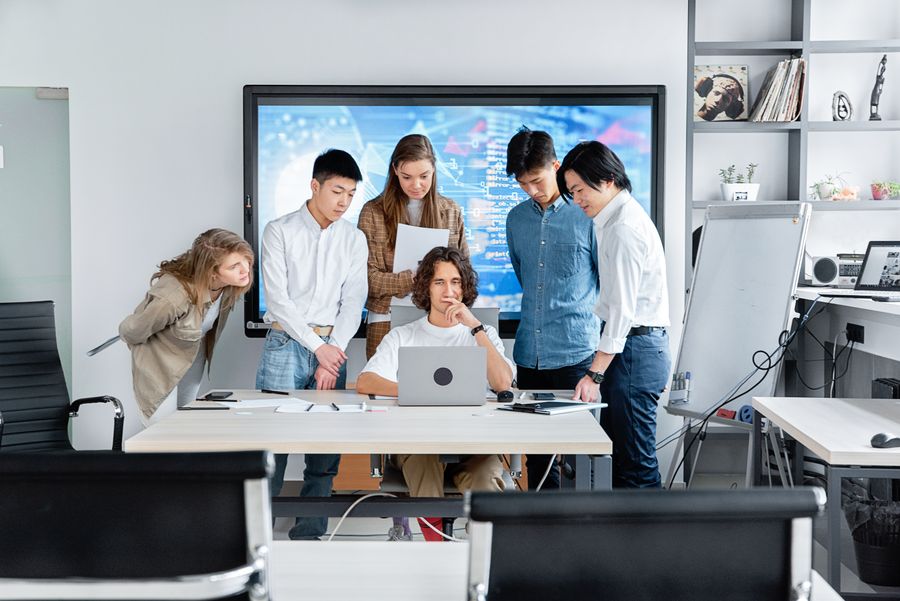
Learning vibe coding alone feels productive at first. You experiment, find workflows that work for you, ship faster. But the moment you're working with teammates who learned differently, friction surfaces immediately.
One person uses AI to generate entire functions and reviews the output skeptically. Another treats AI as a copilot for boilerplate only. A third doesn't trust AI output for security-sensitive code. Each approach is defensible, but the lack of shared standards creates code review bottlenecks, inconsistent test coverage, and arguments about what's acceptable.
Team-based learning solves this by establishing a common vocabulary and shared practices. When your team learns together:
- Code reviews become faster. Everyone knows the team's AI coding standards, so reviewers aren't spending cycles questioning whether AI output is acceptable or spot-checking basics that the team already agreed on.
- Onboarding accelerates. New engineers don't learn vibe coding on their own timeline; they inherit a team practice that's already proven.
- Debugging improves. When a bug surfaces in AI-generated code, the team has collective context about how and why it was written, not just the individual who shipped it.
- Security gets tighter. Shared guidelines about where AI can and can't be trusted prevent individual judgment calls that might miss a vulnerability.
Structuring In-House Training Programs
Building an effective in-house training program doesn't require a formal curriculum or months of planning. It requires structure and intentionality.
Start with assessment. Before teaching, understand where your team actually is. Run a short survey: How many engineers use AI coding tools regularly? Which tools? What problems do they hit? Which practices feel risky to them? This tells you what to emphasize and which concerns are real versus theoretical.
Define your team's AI coding principles. These are the non-negotiable rules that guide how your team uses AI. Examples:
- AI output for security-critical code (authentication, data access, cryptography) must be reviewed by a senior engineer and tested exhaustively.
- AI is trusted for boilerplate, tests, documentation, and refactoring, but human judgment decides architectural decisions.
- Every AI-generated function includes a comment explaining why AI was used and what assumptions it made.
- Pull requests involving significant AI generation are flagged in the title so reviewers know what to expect.
Run structured workshops, not lectures. A two-hour lecture on "Best Practices for Using Claude" will be forgotten by tomorrow. Instead, run hands-on workshops where your team solves real problems with AI together.
Example structure for a 90-minute workshop:
- Introduction (10 minutes): Present a real problem from your codebase: "We need to refactor this payment processing module. It's 400 lines and hard to test."
- Live coding (30 minutes): You (or a respected engineer) live-code using AI, narrating your decisions. "I'm asking Claude to generate unit tests first, then refactor. I'm checking the output because it involves financial logic."
- Hands-on practice (40 minutes): Break into pairs. Each pair gets a different module to refactor with AI assistance. They practice the same workflow you modeled.
- Group review (10 minutes): Each pair shows their result. The team discusses what worked, what was tricky, what they'd do differently.
Build a repository of prompts and patterns. After each workshop or successful project, capture what worked. Document the exact prompts that generated useful code. Share patterns like "How to use AI to generate test fixtures" or "Refactoring a large function with AI assistance." This becomes institutional memory.
Rotate instructors. Don't let one person be the expert. As different engineers master aspects of vibe coding, have them lead future sessions. This prevents knowledge silos and signals that AI proficiency is a team skill, not a specialist role.
Schedule recurring learning. One workshop is a spark, not a change. Monthly 45-minute sessions focused on a single skill (error handling, API design, debugging AI output) keep the practice sharp and give people time to ask questions and share failures.
Collaborative Workshops: Learning Through Problem-Solving

Workshops designed around real problems your team faces beat abstract training every time. The difference is subtle but crucial: you're not learning vibe coding in theory; you're learning it in context.
Consider a workshop titled "Error Handling at Scale." Instead of lecturing about error handling patterns, the workshop structure looks like this:
Phase 1: Problem statement. Show a real error log from your system. "We ship features fast, but our error messages are inconsistent, our stack traces are hard to parse, and customers can't tell what went wrong." Explain the business impact: support tickets, debugging costs, lost trust.
Phase 2: AI-assisted exploration. With the team watching, use AI to:- Generate a framework for consistent error codes and messages.
- Write error middleware that captures and logs context automatically.
- Create helper functions for common failure modes (timeouts, retries, partial failures).
Phase 3: Team implementation. Divide the team into three groups. Each group takes a different section of the codebase and applies the framework you just built with AI assistance. They're not copying; they're adapting the patterns to their specific context.
Phase 4: Integration and review. Each group presents their result. The team identifies patterns that worked and gaps that need filling. You might find that one section revealed an edge case the original framework didn't handle. That becomes the starting point for the next workshop.
The output of this workshop isn't just better error handling. It's:
- Engineers seeing how to think critically about AI output in a high-stakes context.
- Patterns that are owned by the team because they built them, not just received them.
- Confidence that vibe coding can solve real problems, not just generate boilerplate.
Partnering with Educational Institutions
For teams serious about building vibe coding into their DNA, partnerships with universities, bootcamps, and structured training providers add credibility and curriculum depth that internal programs alone can't match.
A partnership typically works in one of three ways:
Custom curriculum development. You work with an institution to build a program tailored to your stack and challenges. They bring instructional design expertise; you bring real problems. The result is a program that could be delivered to your team, to partner companies, or even publicly. Companies like Stripe and GitHub have done this to build industry legitimacy around their tools.
Internship programs with AI focus. Hire interns specifically to work on AI-assisted development projects. Pair each intern with a senior engineer who acts as mentor. The intern learns vibe coding in a real environment; your team gets extra hands and fresh perspectives. Universities get validation that AI coding skills are professionally valuable.
Structured certification or training. Some educational providers now offer vibe coding certifications. Your team completes a structured program, often online and self-paced, then passes an assessment. The advantage is that the curriculum is professionally designed and can be standardized across your organization. The disadvantage is it's less tailored to your specific codebase and practices.
The benefits of institutional partnerships go beyond the training itself:
- Legitimacy. When an engineer has completed a university-backed program on AI-assisted development, hiring managers and clients take their skills more seriously.
- External perspective. Instructors from outside your company spot practices you've grown blind to and suggest improvements.
- Network effects. Your team connects with other organizations learning the same things, creating opportunities for peer learning and collaboration.
- Staying current. Educational institutions track emerging practices faster than most companies can internally. You benefit from their research and updates.
Real Success Stories
Several companies have published case studies on their team-based vibe coding education initiatives, offering concrete proof that the investment pays off.
Case: Mid-size fintech startup (50 engineers). This company built an 8-week internal training program focusing on AI-assisted development within their regulatory constraints. The program included weekly workshops, a shared Slack channel for Q&A, and a "code review checklist" specific to AI-generated code.
Results after 6 months: Feature delivery time decreased by 35%, code review cycle time dropped from 48 hours to 24 hours, and 92% of engineers reported feeling confident reviewing AI-generated code. Importantly, their security audit found zero additional vulnerabilities introduced by AI-generated code compared to periods before the training.
Case: Open-source project community. A large open-source project recognized that contributors were using AI tools inconsistently, sometimes generating low-quality submissions. They created a contributor guide specifically for AI-assisted development, including dos and don'ts, and ran monthly "AI-assisted hacking" sessions where contributors learned together.
Results: Submission quality improved measurably (measured by review iterations required), new contributors onboarded faster, and the project attracted engineers specifically interested in learning best practices around AI-assisted development.
Case: Design-first consulting firm. A firm that builds custom software for clients wanted to differentiate by offering faster delivery without sacrificing quality. They invested in team-wide vibe coding training, partnered with a bootcamp to develop a specialized curriculum, and created a "delivery playbook" for AI-assisted projects.
Results: They reduced project timelines by 40% on average, increased utilization (less idle time between projects), and were able to take on more junior talent because the playbook and training reduced ramp-up time. Client satisfaction stayed high because the emphasis on code quality and testing remained non-negotiable.
Implementation Framework
Here's a structured framework for designing and rolling out your team's vibe coding education initiative:
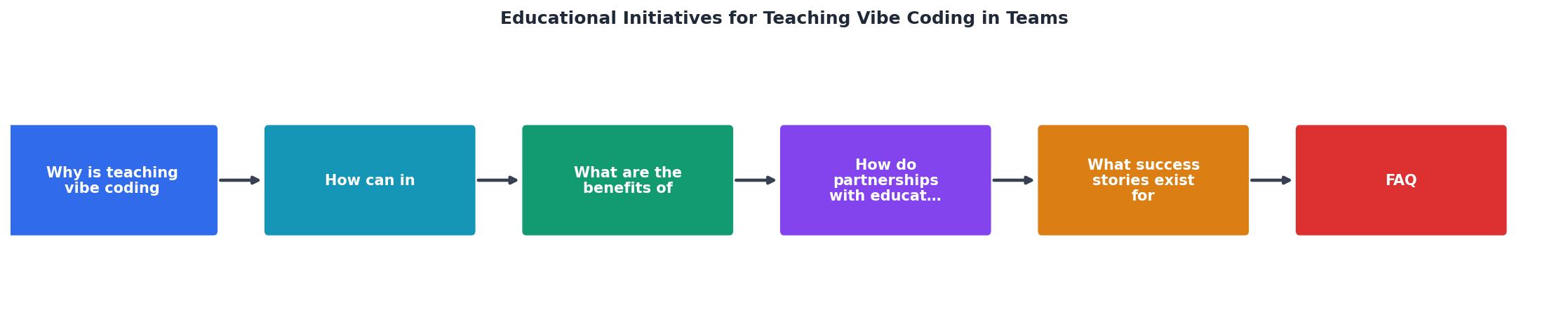
To apply this framework:
- Assess: Survey your team to understand current AI tool usage, confidence levels, and pain points.
- Design: Based on assessment results, define your team's AI coding principles and outline a 6-month learning plan.
- Pilot: Run one intensive workshop with a subset of your team. Gather feedback and iterate.
- Scale: Roll out structured workshops monthly. Capture learnings in a shared repository.
- Partner: Explore partnerships with educational institutions to deepen and formalize training.
- Measure: Track metrics like code review time, defect rates, and engineer confidence to validate impact.
- Iterate: Quarterly reviews of what's working. Adjust based on team feedback and changing tooling landscape.
Team Vibe Coding Training Program Design
Your progress is saved automatically in your browser.
Interactive Training Progress Dashboard
Here's an example of how to track training adoption and impact across your team. This dashboard helps teams visualize progress and identify where additional support is needed:
Team Training Progress Example
This dashboard tracks key metrics for a typical team mid-program: training coverage, performance improvements, and adoption signals. Most teams implementing structured programs see similar trajectories over 6 months.
"The concept has resonated so deeply with the public zeitgeist that it was named Collins English Dictionary's Word of the Year for 2025.">, When teachers become builders: Vibe coding and the future of educational technol
This shift reflects a broader realization: vibe coding isn't just a productivity tool for individual developers. It's reshaping how we think about teaching technical skills, building team competencies, and structuring engineering organizations. Educational initiatives are no longer optional, they're how teams mature their AI practices from scattered experimentation to coherent capability.
FAQ
Frequently Asked Questions
Additional Resources
- When teachers become builders: Vibe coding and the future of ... - The ability to utilise vibe coding equips them to move from planning to prototyping, from specifying requirements to building and testing ...
- Vibe Coding Educativo - Educational Vibe Coding is a group and methodology focused on creating applications for teaching through vibe coding: a development approach based on ...
- Vibe-Coding 101 for Educators Virtual Workshop - Learn what vibe-coding is, why it matters, and what it makes possible for educators who want to build tools for teaching, learning, and school operations.