

When you ship an AI-built app, you're not just shipping code. You're shipping decisions that affect real people: how their data flows, whether an algorithm treats them fairly, and what happens when things go wrong. Most non-engineers building with AI don't think about this until something breaks. By then, it's too late to fix without damage.
- Data privacy, algorithmic bias, and automated decision-making are the core ethical concerns for non-engineers using AI in coding.
- Protect user data by understanding what information your app collects and where it goes; never assume third-party AI services are private by default.
- Bias in AI systems is real and invisible until it hurts someone; audit your data sources and test your app's output across different user groups before launch.
- Ethical guidelines and checklists turn vague concern into actionable practice.
Why Ethical Issues Matter in AI-Driven Development
You don't need a computer science degree to understand that building responsibly matters. When you use AI to speed up development, you inherit the tool's risks. An AI code generator might suggest code that leaks user data. An algorithmic recommendation engine you add to your app might discriminate without you knowing. A chatbot trained on the internet might repeat harmful stereotypes to your users.
The catch: you're the builder. You're accountable. Not the AI vendor. Not the open-source library. You.
"Of 30661 responses, 66.2% said the most noticeable challenge with the use of AI in their programming was that they did not trust the output the AI provided.">, Ethics of Software Programming with Generative AI: Is Programming without Genera
That distrust exists because ethical concerns are real. They're not hypothetical. Ride-sharing apps that set prices unfairly, dating apps that exclude groups, loan systems that deny credit to minorities, these aren't failures of technology. They're failures of builders who didn't ask the hard questions. And most of those systems were built by teams, with budgets, and oversight. You're building alone or with a small group. The responsibility lands harder on you.
The good news: ethical development is learnable. It's not rocket science. It starts with knowing what to look for and asking the right questions before you ship.
Understanding Data Privacy in AI Applications

Data privacy is the easiest ethical concern to ignore and the hardest to fix after launch. Every piece of user information your app touches, names, email, location, behavior, can be stolen, sold, or misused. AI makes this worse because you often send data to third-party services (Claude API, OpenAI, Anthropic) to get responses back. That data leaves your server.
Here's what you need to know:
- Data classification: Before you ship, list every piece of user data your app collects. Categorize it: public (okay to expose), private (should be encrypted), sensitive (financial, health, identity), and regulated (falls under GDPR, CCPA, HIPAA). Most indie builders skip this and regret it.
- Third-party AI services: When you send user input to Claude or GPT-4, that data goes to Anthropic's or OpenAI's servers. Read the fine print. Some vendors use your data to train models. Some delete it after processing. Some sell aggregated insights. Know which vendor you're using and what happens to the data.
- Storage and encryption: User data should be encrypted at rest (in your database) and in transit (over HTTPS). Don't roll your own encryption. Use a database that handles it (Supabase, Firebase, Railway). If you're storing API keys or payment info, use a secrets manager, not a
.envfile in your repo. - User consent: Before collecting or sending data, tell users what you're doing. A privacy policy isn't legal magic; it's documentation of what actually happens. If your app sends chat messages to an AI API, say so. If you analyze user behavior, say so. Consent matters.
Algorithmic Bias: Invisible but Real
Bias isn't about intent. It's about data. If you train an algorithm on biased data, or if you use an AI model trained on biased data, the bias compounds. An AI recruiting tool trained on past hiring decisions will exclude women and minorities because hiring was biased. A credit-scoring model trained on historical loan data will deny credit to groups who were denied before. A content moderation system trained on content flagged by human reviewers will inherit their blind spots.
Non-engineers often skip this because it feels abstract. It's not. Here's why it matters to you:
- Your model reflects its training data: If you use a pre-built AI model or fine-tune one on your company data, audit the data first. Did it come from a homogeneous group? Did it exclude certain demographics? If you're building a recommendation engine for a music app, but your training data is 80% Western music and 20% everything else, your model will over-recommend Western music.
- Fairness isn't the default: An AI system isn't fair just because it's AI. It's fair when you deliberately test it for bias and adjust it. Test your app's output across demographic groups, age, gender, race, geography, disability, before launch. If the results differ wildly, something's wrong.
- Proxy discrimination is invisible: Bias doesn't always hide in obvious features. An algorithm that charges higher prices based on zip code is using location as a proxy for wealth, which correlates with race. An app that recommends jobs based on "soft skills" as predicted by an AI might be proxying for education level or dialect. Look for these hidden proxies.
Automated Decision-Making and Its Risks

When your app uses AI to make decisions, approving a user, ranking content, setting prices, filtering applications, you've moved from tool to gatekeeper. An algorithm that assists a human is different from an algorithm that decides alone. The second one should scare you.
Automated decisions cause harm in ways humans often don't:
- Scale: A biased human decision affects one person. A biased algorithm affects thousands before anyone notices.
- Invisibility: Users don't know they're being filtered. They just see results. If your job board uses AI to rank candidates and it ranks men higher, the women applicants have no idea why they weren't shown. They might blame themselves.
- Permanence: Code doesn't apologize. An algorithm keeps making the same mistake until you fix it. Human judgment can adjust on the fly.
- Make the decision explainable. If an AI rejects a user's application, tell them why. "Our system identified X reason." Not "no reason given."
- Add human review for borderline cases. If a decision is close, let a human look.
- Allow appeal. Users should be able to contest an automated decision. This isn't just ethical; it's often legally required (GDPR Article 22).
- Log decisions. Keep records of what your algorithm decided and why. You'll need these if something goes wrong.
Adopting Ethical Guidelines in Your Workflow
Ethical development isn't a single decision. It's a habit. You need a process that makes it hard to ship unethical code without noticing.
Here's what that looks like:
- Ethical checklist at code review: Before you ship, ask: What data does this code touch? Where does it go? Could this decision harm someone? Encode these questions into a checklist you run through every time.
- Diversity in testing: Test your app with diverse users. Not just people like you. Different ages, genders, abilities, locales, technical skill levels. If it breaks for someone, fix it.
- Documentation of trade-offs: When you choose speed over privacy (e.g., storing unencrypted for now), write it down. Mark it as "Next step". Don't forget it exists. Review it quarterly.
- Third-party audits for high-stakes apps: If your app handles money, health, or identity, consider a security audit or bias audit. It's an expense, but it's cheaper than a lawsuit or reputation damage.
- Privacy by design: Don't collect data you don't need. If you don't need birthday, don't ask for it. If you don't need to send data to an AI API, don't. Less data = less risk.
Real-World Ethical Dilemmas and Solutions
Knowing the concepts is one thing. Facing a dilemma and actually choosing is another. Here are scenarios you might hit:
Scenario 1: Faster with Less Privacy
You're building a fitness app. You could store workout data locally on the user's phone (private, but slow) or send it to an AI service for analysis (fast, but data leaves your server). The AI analysis is what makes the app worth using.
Solution: Encrypt the data before sending. Or send a hashed version that can't be reversed. Or ask users upfront and let them choose (send data for better features, or keep it local for slower features). Be transparent. Let users decide if speed is worth it to them.
Scenario 2: Bias You Didn't Intend
Your job board recommends jobs to users. After launch, you notice women are recommended remote jobs 2x as often as men. Men get recommended high-salary jobs more often. You didn't code this. It's in the training data or the AI model.
Solution: Audit your recommendation logic. If the AI model is biased, retrain it on balanced data or use a different model. If it's your data, balance it. Test again. Add monitoring so you catch similar issues early. Post-launch, this is expensive. Pre-launch, it's a checklist item.
Scenario 3: Pressure to Skip Security
You're shipping in two weeks. Your co-founder says "Let's encrypt user passwords after launch. We're not handling credit cards, so it's fine." You know it's not fine.
Solution: Do it now or don't do it at all. Security isn't a patch. It's a foundation. Pushback politely but firmly. If you skip it, you own the fallout when data leaks. It's not worth the two-week rush.
Creating Your Ethical Framework
The practical way forward is a framework. Not vague principles. Actionable steps you take every time you code, review, or ship.
Here's what that looks like visually:
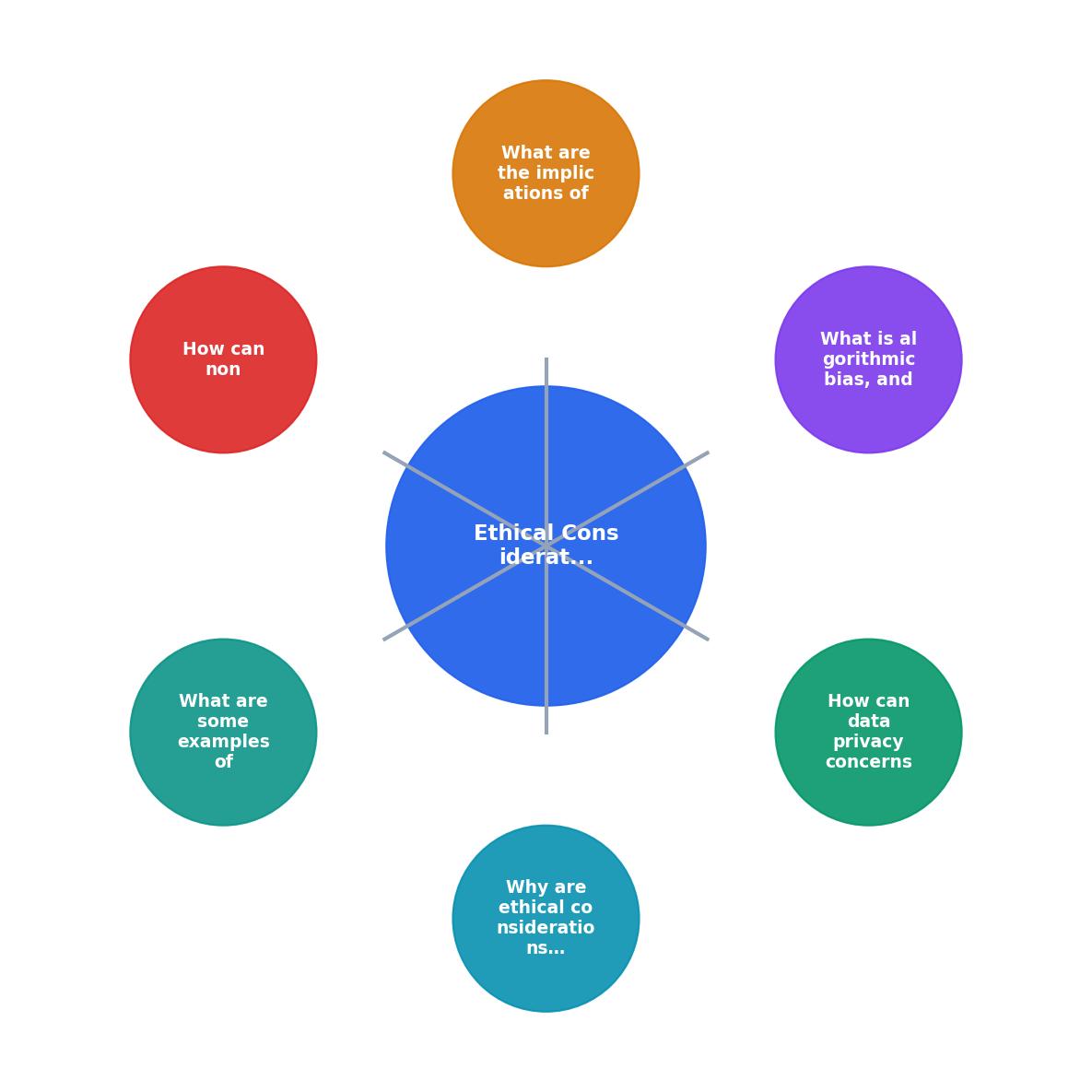
Your framework should answer:
- What data does this feature touch? Classify it. Name it. Know what it is.
- Where does it go? Local database? Third-party API? Both?
- Who can access it? You, your team, the AI vendor, the user?
- What decision does it make? Does code decide something about the user? Could it discriminate?
- How do we test for bias? What groups will we test with? What metric are we checking?
- What's the rollback plan? If this goes wrong, how fast can we undo it?
- Can the user understand and contest it? If an algorithm affects them, do they know why?
Your Ethical Checkpoint
This checkpoint is the practical version of ethical thinking. It's not a feel-good exercise. It's the difference between "my app handles data responsibly" and actually handling data responsibly.
Practical Artifact: Ethical Audit Checklist
Pre-Launch Ethical Audit Checklist
Your progress is saved automatically in your browser.
FAQ
Frequently Asked Questions
Shipping with AI is faster, but it's not consequence-free. The code is yours. The trust is yours. The responsibility is yours. That's not a burden, it's power. You get to decide what kind of builder you are.
Start with the checklist. Run it before you ship. Then run it again post-launch. Ethics is a habit, not a checklist you finish. The habit compounds.
Additional Resources
- Ethics of Software Programming with Generative AI - Ethical concerns arise due to AI's inability to fully understand legal and ethical norms, leading to potential coding assistants are designed ...
- Use of Artificial Intelligence in Engineering Practice - The use of AI in engineering practice raises ethical considerations, particularly concerning competency, direction and control, respect for ...
- Chapter 3 Ethics of Using AI | AI for Efficient Programming - Generative AI models have access to large amounts of data that is currently unregulated and may include data that should be protected for privacy reasons.