

Photo by Tima Miroshnichenko from Pexels
Vibe coding is not a replacement for project management, it's a capability that demands smarter process integration. Teams that bolt vibe coding onto existing workflows without adaptation create chaos: overlapping work, inconsistent code quality, and AI-generated features nobody can maintain. But teams that deliberately integrate vibe coding into established frameworks like Agile and Scrum see productivity gains of 30-40% alongside maintained quality and ownership. The key is treating vibe coding as a force multiplier within your existing discipline, not as an excuse to abandon it.
TL;DR
- Vibe coding amplifies Agile and Scrum workflows when integrated intentionally; it doesn't replace sprints, standups, or code review, but changes how each works.
- Success requires clear prompt standards, explicit guardrails in sprint planning, and stronger peer review processes, not lighter ones.
- Engineering leads must establish team norms upfront: which decisions remain human, where AI outputs get verified, and how to handle AI-generated technical debt.
- Integration challenges (ambiguous prompts, drift from architecture, skill atrophy) are solvable with structured practices and transparent team agreements.
How Vibe Coding Complements Project Management Frameworks
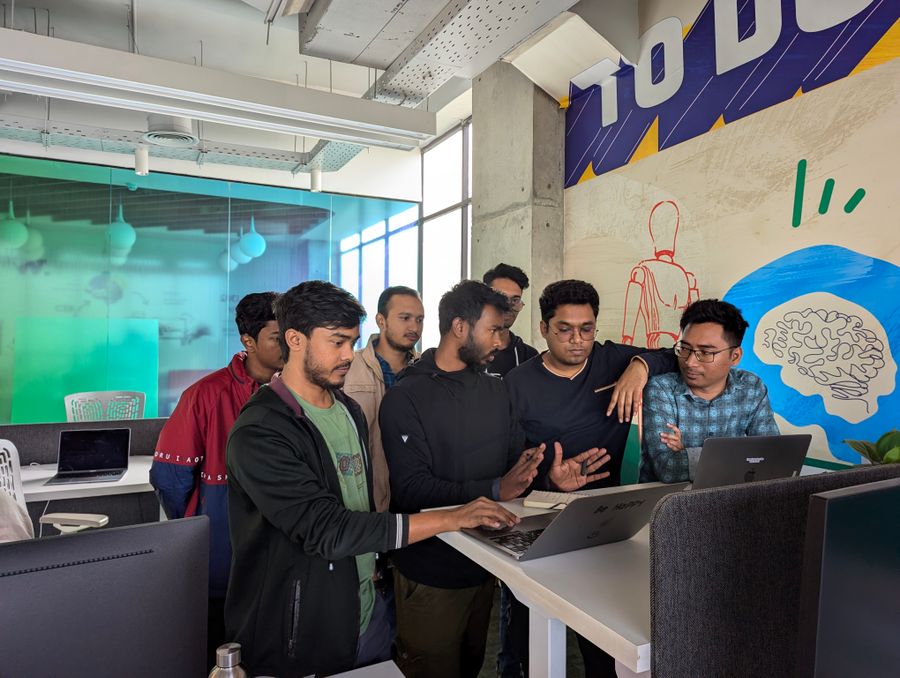
Agile and Scrum exist to solve a real problem: shipping incrementally, adapting to feedback, and keeping teams accountable. Vibe coding doesn't solve that problem, it solves a different one: turning high-level intent into working code faster. The two are orthogonal.
When a team commits to a sprint goal in Scrum, the goal doesn't change because you're using AI. What changes is how fast you can explore the problem space and build toward it. Instead of a developer spending four days building scaffolding for a feature, vibe coding lets them scaffold in four hours, then spend the remaining time refining, testing, and integrating with the rest of the system.
The best framework integrations treat vibe coding as a productivity lever within each ceremony and artifact:
Sprint planning gets faster. Instead of gut-based estimates, teams can run quick AI-assisted spikes to validate assumptions before committing to work. A feature that looks risky becomes concrete code in an hour, and the team makes informed decisions.
Standups change focus. They stop being "status update" theater and become problem-solving sessions. Since AI handles repetitive coding, standups become about design decisions, integration points, and unblocking dependencies, the human work.
Code review gets heavier, not lighter. This is critical. Vibe-generated code is fast but variable in quality. Reviews need to catch not just bugs but architectural drift, security assumptions, and consistency with team patterns. More code flowing through review means review discipline is non-negotiable.
Retrospectives become more valuable. Teams spot patterns in what vibe coding excels at (glue code, CRUD endpoints, boilerplate migrations) and what it struggles with (novel algorithms, system design choices, security policy). They adjust workflows based on evidence, not assumption.
Strategies for Integrating Vibe Coding with Agile and Scrum
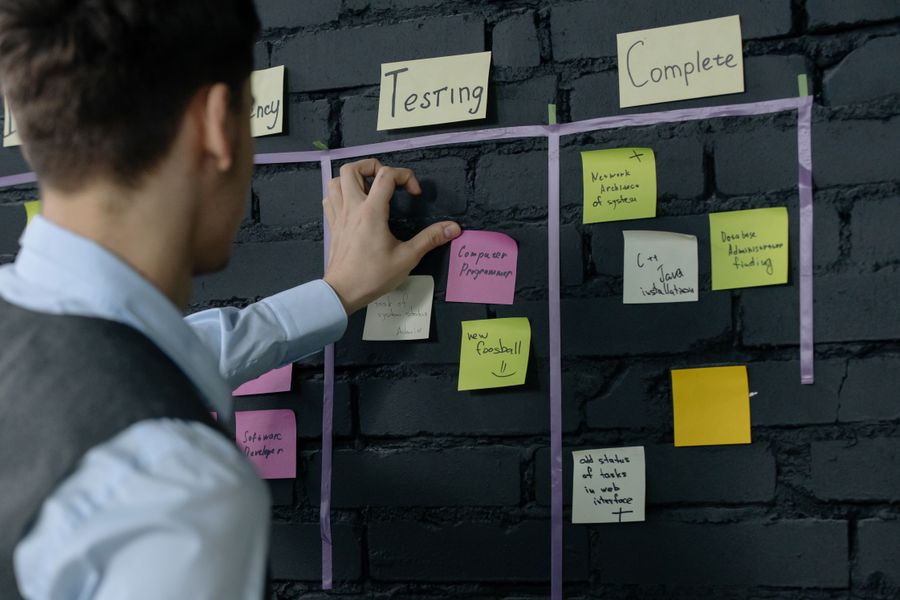
Integration isn't a one-time rollout. It's a series of deliberate shifts in how work gets defined, estimated, and verified.
Define prompt standards early. The first integration pain point is ambiguous prompts. When one developer says "add user authentication" and another says "implement OAuth2 with JWT refresh tokens and PKCE flow for single-page apps," the AI outputs diverge wildly. Early in adoption, establish a prompt template your team uses for vibe coding tasks:
- Context: What existing code or architecture should the AI know about?
- Constraints: Performance targets, security requirements, tech stack boundaries?
- Acceptance criteria: What does done look like? What should the output NOT do?
- Scope boundaries: Is this a full feature, a module, or a utility function?
Adjust sprint velocity calculations. Don't just add vibe coding overhead to estimates. Instead, run 1-2 sprints with vibe coding enabled and let velocity stabilize. You'll see two effects: some tasks finish much faster (glue code, boilerplate), while others stay constant or get slower (because peer review gets thorough). Calculate a blended velocity and use that for future planning. Most teams find velocity increases 25-35%, but only after review overhead is accounted for.
Assign AI-generated code ownership explicitly. Vibe coding outputs are draft code, not production code. Someone must own the integration, testing, and maintenance. In some teams, that's the person who wrote the prompt; in others, it's a dedicated reviewer. Clarity here prevents the "nobody owns this" trap where AI-generated code becomes technical debt because no single person feels responsible.
Run architecture reviews before sprint work starts. If vibe coding is enabled, architecture decisions become upstream of sprint planning. A single bad architecture decision amplified across ten AI-generated functions becomes a maintenance nightmare. Before a feature enters a sprint, have the tech lead review the proposed design. This shifts architectural thinking earlier and prevents AI from cementing poor choices.
"Most of the chaos stemmed from poorly defined prompts that left too much ambiguity.">, "Vibe Coding" successfully is project management on steroids.
Ensuring Successful Vibe Coding Integration
The gap between vibe coding adoption and successful integration is not technical, it's organizational. Teams that fail typically have clear symptoms: AI-generated code accumulates in branches because nobody reviewed it, prompts drift away from team standards, or developers skip code review because "the AI handled it."
Successful teams prevent this with five practices:
1. Establish explicit guardrails. Not every decision can be automated. Core architectural decisions, security policies, and data model changes should remain human-driven. Document which decisions are "human-led with AI assistance" vs. "AI-led with human review." This prevents sprawl where AI starts making choices it shouldn't.
2. Invest in code review discipline. More code means more review. Some teams add review capacity by pairing junior developers with senior ones specifically for AI-generated code review, juniors learn patterns, seniors maintain standards. Others rotate review responsibility to distribute the load. Either way, review bottlenecks will strangle adoption.
3. Create a prompt library. After three months of vibe coding, good teams have 15-20 prompt templates for common tasks: "add API endpoint", "write database migration", "extract component". Codify these. New team members get onboarded faster, outputs are more consistent, and prompts improve over time as the team adds context and constraints.
4. Track vibe-coded vs. hand-coded metrics separately. For the first six months, measure defect rates, review cycle time, and time-to-merge for AI-generated code separately from human-written code. You'll spot blind spots (e.g., AI-generated tests are weaker) and adjust your process. Eventually, the metrics should converge if integration is working.
5. Reserve sprint capacity for technical debt. Vibe coding generates technical debt faster than humans because speed favors breadth over depth. Reserve 15-20% of sprint capacity explicitly for debt paydown: refactoring AI-generated code, improving tests, and simplifying over-engineered outputs. This prevents the death spiral where every sprint feels slower because debt piles up.
Case Studies of Successful Integration
Real examples show what works:
Fintech startup (40 developers, full Scrum). The team adopted vibe coding for back-end API endpoints and database migrations. They defined strict constraints: "all AI-generated code must use the service abstraction layer, all database changes must be reviewed by the data architect, all API handlers must include security review." In the first sprint, velocity jumped 45%, but defect rate spiked 60%. They added a security review gate and paired junior developers with senior ones for code review. By sprint 6, velocity was up 28% and defect rate was down 15% below baseline. The key: they treated vibe coding as a multiplier, not a shortcut, and invested in review discipline upfront.
B2B SaaS (12 developers, Kanban with sprint-like cadence). This team used vibe coding for front-end components and admin dashboards, areas where consistency and time-to-market mattered most. They created a component library that vibe coding could reference, established a prompt template ("generate component matching design system X with accessibility Y"), and assigned one senior engineer to review all vibe-coded components in a dedicated review window. Component delivery time dropped 50%, and they caught 3 critical accessibility bugs that vibe coding had introduced, then fixed the prompts to prevent them recurring.
Enterprise platform team (80+ developers, SAFe). Adoption here was slower because coordination overhead is higher. They piloted vibe coding in one squad (8 developers), created a baseline of practices and tooling, then rolled it out to other squads incrementally. The pilot squad documented what worked: prompt standards, review workflows, and guardrails around system-level decisions. By the time squads 2-4 came online, they had a playbook. Integration success here came from treating it as a people-process problem, not a technology problem.
The common thread: successful integration requires intentional process change, not just tool adoption.
Addressing Integration Challenges

Real challenges emerge after the first month. Here's how to handle them:
Challenge: Prompt drift. Over time, developers customize prompts for edge cases, and the standard diverges. Solution: Establish a "prompt review" process every sprint. Have one person audit a sample of prompts used that week, catch deviations, and update the standard library. Document why each constraint exists so new team members understand the reasoning.
Challenge: Architecture consistency. AI-generated code doesn't always respect team patterns. A developer asks for a caching layer, and the AI generates three different approaches across three features. Solution: Enforce architecture reviews before sprint work begins. Use code review to catch drift, then update the architecture reference documentation so the AI can reference it in future prompts.
Challenge: Testing quality. Vibe-generated tests often have lower coverage or miss edge cases. Solution: Don't assume tests are complete. Treat AI-generated tests as a starting point. In peer review, have one developer spend 30 minutes asking: "What did the AI miss here?" Add those cases, then the test suite is solid. Over time, improve prompts to request specific coverage targets.
Challenge: Skill atrophy. Junior developers ship faster, but they're not learning how to solve hard problems. Solution: Rotate who writes prompts and who does pure vibe coding. Some sprints, a junior owns the prompt-writing for a feature (thinking through constraints, architecture, edge cases), then a senior reviews the AI output. Next sprint, reverse roles. This distributes skill-building and prevents any one person from becoming a "prompt bot."
Challenge: Review bottleneck. You have one senior engineer reviewing all AI-generated code, and they become the constraint. Solution: Scale review with pairing, rotate responsibility, or add review capacity. Some teams use async review: AI-generated code gets flagged for review, but work on parallel tasks starts while review happens. If review finds major issues, the original task gets bumped. This prevents one reviewer from blocking the whole sprint.
Challenge: Code ownership ambiguity. A feature is shipped, but nobody feels responsible for maintaining the AI-generated parts. Solution: Make ownership explicit in your sprint artifacts. When a story includes vibe-coded work, add a note: "AI-generated code owner: [name]". That person is responsible for understanding it, defending it in code review, and owning bugs. This ties accountability to the story, not to a separate process.
Best Practices for Engineering Leaders
Leading a team through vibe coding integration means making decisions that feel counterintuitive: invest more in review when moving faster, spend time writing better prompts instead of just coding, and explicitly manage technical debt that nobody planned for.
Set the tone early. In the first standup after enabling vibe coding, explain what's changing and what isn't. Quality standards don't drop. Architecture decisions remain human-led. Code review gets stricter, not lighter. This prevents the expectation that vibe coding means "less rigor."
Create feedback loops. After two weeks, ask the team: What's working? What's slowing you down? Use their feedback to adjust prompts, review processes, and constraints. This shows that integration is adaptive, not a fixed policy.
Measure the right things. Track sprint velocity, defect rates, and time-to-merge, but also track review cycle time and time spent on technical debt paydown. If defect rate is steady but review time doubled, that's a problem. If velocity increased but developers report lower job satisfaction because everything feels rushed, that's a signal to slow down and invest in quality.
Build in reflection. Every sprint retrospective, reserve 15 minutes to discuss: How is vibe coding affecting our process? What should we adjust? This keeps the integration from calcifying into a poor state. Some teams find they need to dial back AI usage in certain areas (e.g., "stop using vibe coding for database migrations, they're error-prone") based on evidence.
Invest in tooling. Good vibe coding integration is supported by tooling: prompt templates in your IDE, integration with code review platforms to flag AI-generated code, linting rules that catch common AI mistakes. Time spent here pays dividends across the team.
The Integration Workflow at a Glance
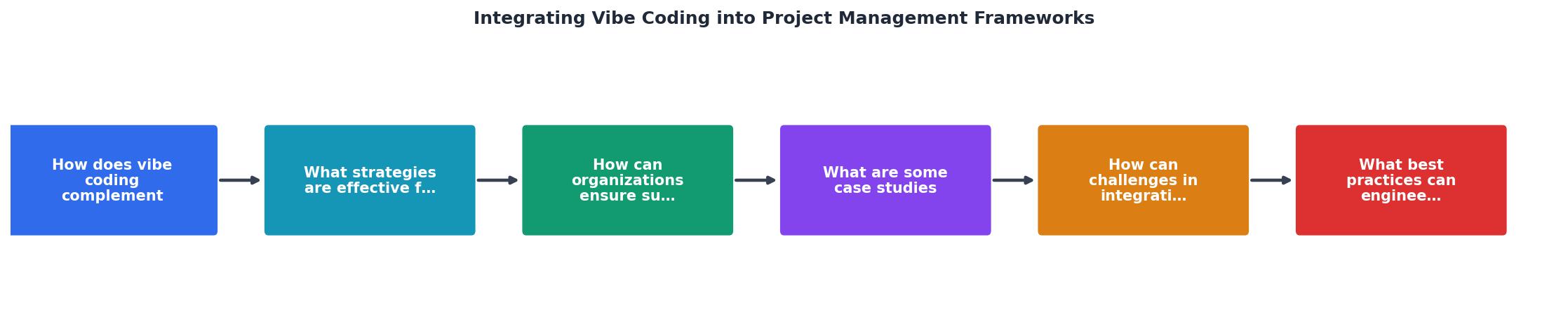
Here's how the process flows across a typical sprint:
- Sprint planning: Architecture decisions are confirmed, constraints are clear, and developers know which tasks are candidates for vibe coding.
- Development: Developers write prompts, iterate with AI, and generate code. They run locally, test early, and commit when ready for review.
- Code review: Reviewers flag AI-generated code, check for architecture compliance, and verify testing. This is where quality gates live.
- Merge & deploy: Merged code includes owner accountability. If bugs appear later, the owner triage them, update prompts, and prevent recurrence.
- Retrospective: The team reflects on what vibe coding did well and where it fell short. Prompts improve, guardrails adjust, and the cycle repeats.
An interactive dashboard below shows a realistic example of how key metrics evolve in the first three sprints of integration:
Integration Metrics: First 3 Sprints
This dashboard shows a realistic trajectory: velocity spikes initially, then review overhead and technical debt management bring it to a sustainable level. By sprint 3, defect rate is lower because review discipline kicked in, and technical debt paydown is built into the workflow.
Integration Readiness Checklist
Your progress is saved automatically in your browser.
Best Practices for Leadership
1. Lead with clarity, not permission. Don't ask the team if they want to try vibe coding. Decide as a leader that it's part of the workflow, then explain how it works and what changes. Most developers are excited once they see concrete practices, not vague policies.
2. Invest in prompt discipline. The fastest win is good prompt templates. Spend two days with the team building 10-15 templates for your most common tasks. Those become living documents that improve every sprint.
3. Protect code review quality. Code review is the single most important bottleneck. Don't let it become a checkbox. If you're seeing 5-minute reviews of large features, you have a problem. Address it explicitly: add review capacity, reduce concurrent work, or dial back vibe coding until review can keep pace.
4. Measure outcomes, not activity. Don't measure "lines of code per sprint" or "number of AI-assisted tasks." Measure velocity, defect rate, and developer satisfaction. These tell the real story.
FAQ
Frequently Asked Questions
Additional Resources
- "Vibe Coding" successfully is project management ... - "Vibe Coding" successfully is project management on steroids. Curate the right libraries and frameworks to use - enforce boundaries
- Vibe Coding Without the Chaos: A Technical PM's 9-Step ... - Vibe Coding Framework for Technical Project Managers 2. Define the Solution. Start With a Non-Negotiable File Structure 4. Use Figma as Both ...
- A Structured Workflow for "Vibe Coding" Full-Stack Apps - Use solid foundations like full-stack frameworks (Wasp) and UI libraries (Shadcn-admin) to reduce boilerplate and constrain the problem space ...