

Engineering budgets at large organizations keep climbing while delivery timelines stay flat or get worse. The average enterprise spends between 60 and 70 percent of its software budget on maintenance and incremental feature work, not innovation. Vibe coding, the practice of using AI to generate and iterate on production code through natural-language prompts, offers a concrete path to cut those costs without gutting headcount. This article breaks down the strategies, the traps, and the numbers behind scaling vibe coding across a real engineering organization.
Photo by Jakub Zerdzicki from Pexels
TL;DR:- Large organizations can reduce development costs by 20 to 40 percent by deploying vibe coding across teams for boilerplate generation, test scaffolding, and migration tasks.
- The savings come from automating repetitive coding work, not from replacing engineers.
- Success requires governance guardrails, prompt libraries, and a review culture that treats AI output like junior-developer code.
Why Cost Reduction Matters Now
Software development costs at enterprise scale are not just salaries. They include tooling licenses, cloud infrastructure for CI/CD, QA cycles, onboarding time for new hires, and the invisible tax of context-switching. A 200-person engineering org easily burns $30M+ per year before a single feature ships.
Most of that spend goes to keeping the lights on. Bug fixes, dependency upgrades, API migrations, compliance patches. These tasks are necessary but repetitive. They are also exactly the kind of work where AI-assisted coding delivers the fastest ROI.
The pressure from leadership to "use AI" is real. But pressure without a plan creates chaos: inconsistent adoption, quality variance across teams, and security gaps nobody owns. The goal is not to adopt AI for the sake of a slide deck. The goal is to identify the specific cost drivers in your development lifecycle and apply vibe coding where it actually moves the needle.
How Vibe Coding Cuts Costs

Vibe coding works by letting developers describe what they need in natural language and having an AI model generate the implementation. At individual scale, this saves minutes per task. At organizational scale, those minutes compound into weeks of recovered engineering capacity per quarter.
Here is where the savings actually land:
- Boilerplate generation. CRUD endpoints, data models, serialization layers, form validation. A single prompt in Cursor or Copilot produces what used to take 30 to 90 minutes of manual typing. Across 50 developers writing 3 to 5 such components per week, that is 150 to 450 hours saved monthly.
- Test scaffolding. Writing unit tests for existing code is the task engineers avoid most. AI generates test suites from function signatures and docstrings in seconds. Teams that adopted AI-assisted test generation report test coverage increases of 15 to 25 percentage points within one quarter.
- Migration and refactoring. Moving from one framework version to another, updating deprecated API calls, converting callback-based code to async/await. These mechanical transformations are ideal for AI because the patterns are well-documented and repetitive.
- Documentation. Generating inline docs, README files, and API reference pages from code. This is low-risk, high-value work that engineers chronically skip.
Strategies for Automating Repetitive Work
Not every task benefits equally from AI assistance. The highest-ROI automation targets share three traits: they are repetitive, well-defined, and low-risk if the output needs a small correction.
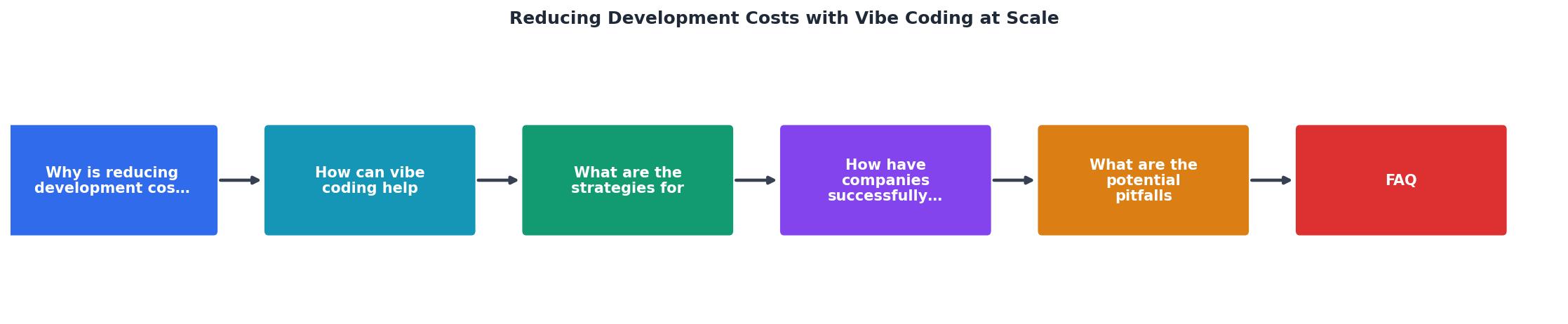
The process follows a clear sequence: Identify repetitive tasks, Build prompt templates, Generate with AI, Review and validate, Measure savings, and Iterate on prompts. Each step feeds back into the next. The prompt library grows over time, and review overhead drops as templates mature.
Concrete strategies that work at scale:
- Shared prompt libraries. Create a team-wide repository of tested prompts for common tasks. A prompt that generates a REST controller with error handling, logging, and input validation saves every developer on the team from writing that prompt from scratch. Version these prompts like code.
- AI-assisted code review. Use AI to pre-review pull requests for style violations, missing error handling, and common security issues before a human reviewer sees them. This cuts review cycle time by 20 to 30 percent.
- Template-driven scaffolding. Combine AI generation with project-specific templates. Instead of a generic "create a service class," the prompt references your organization's service base class, logging conventions, and error taxonomy.
- Batch migrations. When upgrading a dependency across 200 microservices, write one prompt that handles the transformation pattern, validate it on 5 services manually, then run it across the rest with automated testing as the safety net.
"The key differentiator turned out to be latency.">, Scaling Vibe
That quote captures something critical. The organizations that get the most from vibe coding are not the ones with the fanciest models. They are the ones that reduced the latency between "developer has a task" and "developer has working code in review." Every friction point you remove from that loop compounds across the team.
Scaling Vibe Coding Across Teams
Rolling out AI-assisted development to one team is straightforward. Rolling it out to ten teams with different tech stacks, different risk profiles, and different levels of AI enthusiasm is a governance problem.
Here is what the dashboard looks like for a typical mid-size engineering organization tracking vibe coding adoption and cost impact across teams:
Vibe Coding Cost Impact Dashboard (Example: 8-Team Org)
The numbers above represent a realistic scenario for an organization with roughly 120 developers across 8 teams. The 14% flag rate on AI-generated code is normal and expected. It drops as prompt libraries mature and developers learn to write better prompts.
Key organizational moves for scaling:
- Appoint an AI adoption lead per team. This person owns the prompt library, tracks metrics, and serves as the first point of contact for AI-related code review questions.
- Standardize tooling. Pick one or two AI coding tools (Cursor, GitHub Copilot, Claude) and support them officially. Shadow IT with random AI tools creates security and compliance blind spots.
- Create an AI code policy. Define what AI-generated code must go through: the same review process as human code, plus automated security scanning. The Vibe Coding Bible at vibecodingbible.org covers governance frameworks for exactly this scenario.
- Track cost metrics monthly. Hours saved, review cycle time, defect rates on AI-generated vs. human-written code. Without data, the initiative dies at the next budget review.
Pitfalls and How to Avoid Them
Scaling vibe coding is not risk-free. Here are the failure modes I see most often:
Quality drift. When AI generates code fast, developers stop reading it carefully. The fix: mandatory review checklists that include AI-specific items like "verified error handling paths" and "checked for hallucinated API calls."
Prompt rot. Prompts that worked with GPT-4 may produce garbage with the next model version. Version your prompt library and run regression tests on prompt outputs when you upgrade models.
Security blind spots. AI models do not understand your threat model. They generate code that works but may include SQL injection vectors, hardcoded secrets, or overly permissive CORS headers. Automated SAST/DAST scanning on every PR is non-negotiable.
Over-reliance on a single model provider. If your entire workflow depends on one API and that API has an outage or a pricing change, your productivity gains vanish overnight. Abstract the AI layer so you can swap providers.
| Without Governance | With Governance |
|---|---|
| Inconsistent AI usage across teams | Standardized prompt libraries and tooling |
| Security gaps in generated code | Automated SAST/DAST on every PR |
| No cost tracking, no ROI proof | Monthly metrics dashboard |
| Prompt quality degrades silently | Versioned prompts with regression tests |
| Single-provider dependency | Abstracted AI layer, multi-provider ready |
Resource Optimization Checklist
Vibe Coding Cost Reduction Checklist for Large Organizations
Your progress is saved automatically in your browser.
FAQ
Frequently Asked Questions
Additional Resources
- I Slashed My Vibe Coding Costs from $300/Month to $0 ... - Vibe Coding Costs from $300/Month to $0. A dev would cost $5,000+/month. You can build production-ready AI products with a $0/month stack. Zero ...
- Scaling Vibe-Coding in Enterprise IT: A CTO's Guide to ... - Less predictable costs due to usage-based billing. Firebase reduced our initial backend development time by over 60% compared to building ...
- Vibe coding is fun — until you have to ship at scale - Vibe coding can lower the barrier to entry for experimenting. Vibe coding often emphasises short-term wins over long-term scalability. This can ...