
Photo by Jessica Lewis 🦋 thepaintedsquare from Pexels
Large development teams are at an inflection point. Vibe coding, AI-assisted development that balances speed with rigor, has moved from experimental practice to operational standard, but adoption remains uneven and risky. Teams that treat it as a silver bullet stumble into quality collapse and security gaps. Teams that ignore it fall behind in throughput and hiring competition. The real opportunity lies in the middle: systematic adoption with clear guardrails, team-wide practices, and measured outcomes.
TL;DR
- Vibe coding adoption across large teams is accelerating but fragmented; consistency and policy are now competitive advantages.
- Top challenges include AI code review burden, security concerns, team skill variance, and maintainability at scale.
- Teams moving fastest are enforcing structured AI workflows, investing in review tooling, and treating AI-generated code as a category requiring its own discipline.
- Industry data shows 60-75% productivity gains where discipline is applied; quality and security metrics improve where vibe coding is not treated as a shortcut.
Why 2026 Matters for Team Leaders
Vibe coding is no longer optional. Junior developers expect AI in their workflow. Candidates screen for companies that embrace, not resist, AI-assisted development. At the same time, the hype has run ahead of the reality. Teams that onboarded AI tools without process discipline are now dealing with technical debt, security audits, and burned-out reviewers drowning in AI output. The teams winning in 2026 are those that made the hard choices: defining what vibe coding means for their org, building review and validation structures, and measuring results honestly.
The landscape shifted in the last two years. What began as individual developers using Copilot has become a team coordination problem. Deployment pipelines, security reviews, and test coverage aren't optional when your team of twenty is shipping AI-generated code at twice the historical volume.
Emerging Trends in Vibe Coding for 2026
Several clear patterns are shaping how large teams approach vibe coding this year.
AI-native code review. The first wave of vibe coding treated AI output like any other pull request. That broke under load. Now teams are investing in dedicated review workflows: AI-generated code gets flagged, routed to security-focused reviewers, tested with higher coverage standards, and sometimes auto-reverted if it hits guardrails. Tools are emerging specifically for this layer. GitHub Copilot's code review features, specialized static analysis for AI output, and risk-scoring systems are becoming baseline infrastructure.
Specialist roles emerging. Some teams are creating "AI literacy" roles, engineers who specialize in prompt design, AI output validation, and workflow optimization. This isn't yet a title you see on org charts, but the work is real and it's becoming full-time at larger orgs. These people act as bridges between engineers who use AI and engineers who worry about the quality and security implications.
Agentic workflows replacing simple autocomplete. The conversation has moved past "Copilot finishes my line" to "I describe the feature and an AI agent writes tests, implements it, and flags edge cases." Tools like Claude with extended context, specialized task runners, and multi-step validation chains are the new normal. Teams are building internal wrappers, effectively custom coding assistants tuned to their architecture, standards, and risk profile.
Security as a first-class concern. After high-profile incidents where AI-generated code introduced vulnerabilities, security review of AI output is no longer a nice-to-have. SAST (static analysis security testing) tools are being reconfigured to flag AI-generated code separately and with stricter standards. Some teams are building internal scanners specifically trained to catch patterns in AI output that humans might miss.
Consolidation of tooling. The market was fragmented, Copilot, Codeium, Claude, ChatGPT, Lovable, v0. Now we're seeing teams standardize. Companies that bet on Copilot are investing deeper; companies using Claude are building workflows around its strengths (context depth, reasoning). The "try everything" phase is ending.
Challenges Large Teams Face

Scaling vibe coding reveals hard problems.
Code review bottleneck. One senior engineer reviewing AI output from six junior developers is a losing game. The volume is too high, the mental fatigue sets in, and critical bugs slip through because the reviewer is numb. The solution isn't just "hire more reviewers." It's structural: automated validation catches 60-70% of issues, then human reviewers focus on logic, architecture, and security. Without this tiering, code review becomes a career killer.
Skill bifurcation. Senior engineers who learned to code the hard way sometimes resist AI. Junior engineers who've never written code without an AI copilot struggle with debugging and first-principles problem-solving. Large teams are seeing widening gaps in debugging ability, architectural reasoning, and the kind of deep work that happens when you're forced to think through a problem without assistance. Bridging this isn't training, it's intentional mentorship that creates space for AI-free work on hard problems.
Consistency and standardization. One team standardizes on a particular prompt structure. Another team uses different conventions. A third team doesn't have any structure. Across a 100-person engineering org, this fragmentation compounds: code quality drifts, security practices vary, and onboarding new engineers becomes a mess. Large teams are now building internal standards, documented prompt patterns, approved AI tools, governance layers, that feel bureaucratic but work.
"This is not a failure of AI-assisted development itself.">, Vibe Coding Trends 2026: Adoption, Productivity, and Code Quality Data
Maintainability questions. AI-generated code often works but sometimes lacks clarity. Comments are sparse. Naming is literal but not always semantic. Two years into vibe coding, teams are discovering that the code shipped fast but becomes hard to modify. Large teams are enforcing style rules, requiring refactoring before merge, and building linters that specifically check for AI-generated code smell, verbose loops, redundant checks, missing error paths.
Governance and compliance. In regulated industries (fintech, healthcare, defense), AI-generated code raises questions. Which regulations apply? If an AI model was trained on open-source code with a GPL license, did that contaminate your code? Large teams in these spaces are building audit trails for all AI-generated code, documenting which tool generated it, what version of the model, and what review happened. This is overhead, but it's becoming mandatory.
IP and licensing. Companies are wrestling with whether AI-generated code belongs to the company or to the developer. Some teams are establishing that all AI code is work product. Others leave it ambiguous. Legal isn't always clear. For large teams sharing code across products, this becomes a real compliance issue.
Adapting to Best Practices in 2026
The teams moving fastest are treating vibe coding as a discipline, not a shortcut.
Build structured workflows. Define the steps: prompt → generation → automated test → security scan → human review (logic and architecture only) → merge. Document this. Make it repeatable. Tools like GitHub Actions can automate most of this. The discipline comes from making it explicit, not optional.
Invest in review tooling. Don't rely on code review PRs. Build dashboards that show AI-generated code, flag patterns, and score risk. Let reviewers see which functions were AI-generated, which tools generated them, and what the review history looks like. Transparency drives better decisions.
Create prompt templates and standards. Instead of "write a function to parse JSON," establish "use this template, specify input/output types, and include error cases." Consistency in prompting correlates with consistency in output.
Measure outcomes rigorously. Track: lines of code per day, deployment frequency, defect rate, security findings in AI-generated code, code review time per pull request, and engineer satisfaction. Compare to non-AI work. Be honest about the gaps. Some metrics will improve; others will reveal problems that need process changes.
Pair AI work with human deliberation. Don't let AI-generated code bypass architectural review. Don't let speed become a substitute for thinking. Schedule regular sessions where engineers discuss design trade-offs, AI or not.
Build internal documentation. Record what works for your team. If a particular prompt structure for database queries works well, document it. If a certain review pattern catches bugs reliably, standardize it. Over time, this becomes your org's vibe coding playbook.
The Process in Action
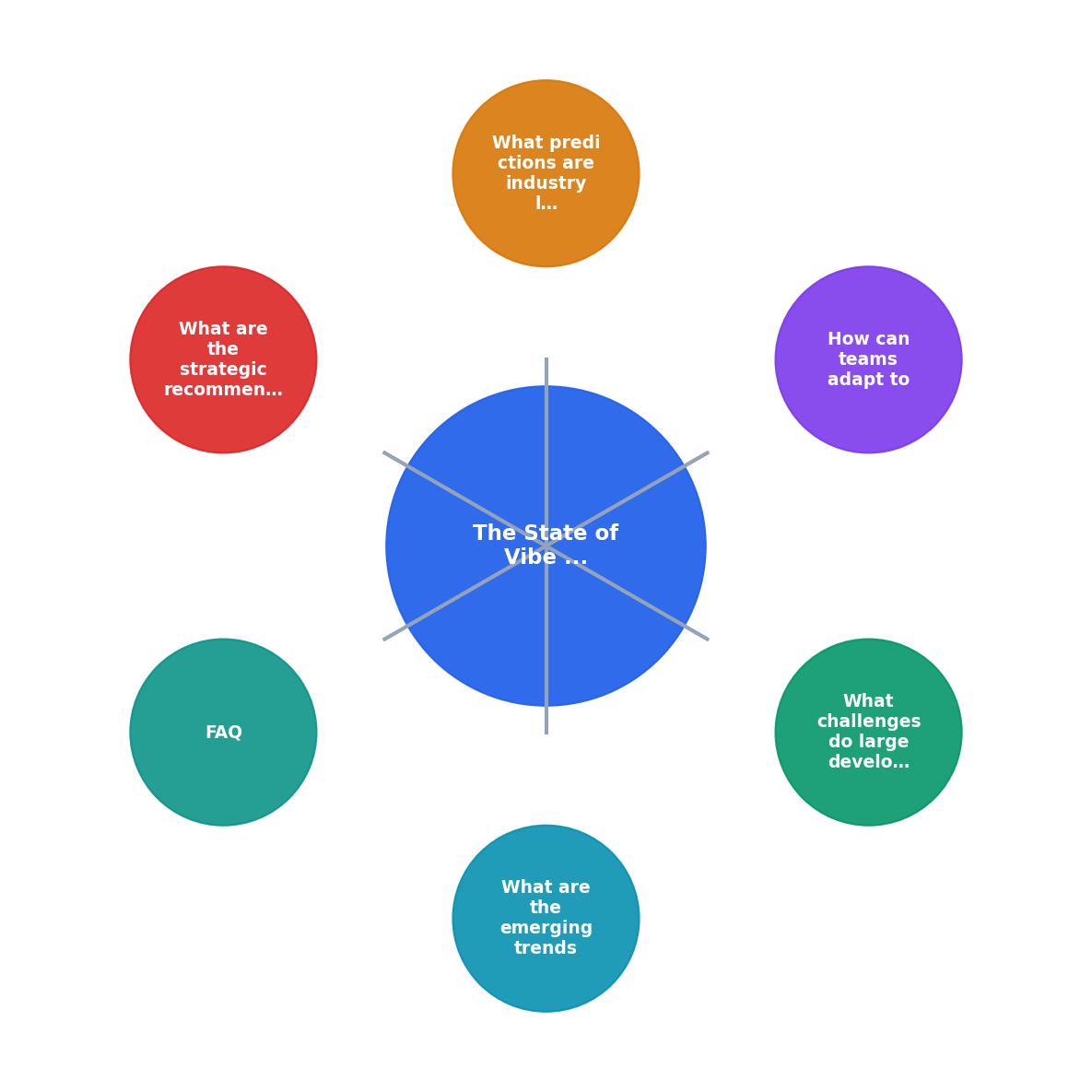
Here's how disciplined teams are structuring vibe coding workflows:
- Define scope and intent, Engineer writes a clear spec or issue describing the feature, requirements, and constraints. This is NOT "write a function." It's "implement user authentication with OAuth2, handle token refresh, log failed attempts, and validate tokens server-side."
- Generate with constraints, AI generates code with guardrails: language, framework, approved libraries, style guide, error handling requirements. The prompt includes examples from your codebase so the AI learns your conventions.
- Automated validation, Linters, type checkers, security scanners, and test runners execute. If tests fail, the code doesn't advance. If security checks flag issues, a human reviewer is notified with specifics.
- Human review (focused), Reviewers skip the style nits (linters caught them) and focus on logic, architecture, and security reasoning. "Is this the right approach?" not "fix the indentation."
- Merge with traceability, The commit history notes that it was AI-generated, which model version, and the review sign-off. This creates an audit trail.
- Monitor in production, Track error rates, performance, and security events for AI-generated code separately from human-written code. If patterns emerge, adjust the process.
Industry Predictions for 2026 and Beyond
Where is vibe coding heading?
Specialization of tools. The era of "one AI coding tool for everything" is ending. Teams will use different tools for different tasks: Claude for complex architectural decisions, Copilot for routine implementations, specialized agents for test generation, security auditors for scanning AI output. This requires discipline but unlocks better results.
Regulatory frameworks emerging. Governments and standards bodies are starting to define rules around AI-generated code in critical systems. By 2027, expect clearer guidelines on disclosure, audit, and accountability. Large teams already preparing for this will have a competitive edge.
Shift toward reasoning and validation. Raw speed is table stakes now. The differentiation is in quality: teams using AI to reason through problems, validate trade-offs, and reduce defects will ship better software. This requires deeper integration of AI into the entire development lifecycle, not just code generation.
Growing premium on debugging skills. As generation becomes automatic, the ability to debug complex systems becomes scarcer and more valuable. Teams will invest in training engineers to debug effectively, because that's where the real leverage is.
Consolidation of practices. Standards will emerge. In five years, "good vibe coding practice" will be as defined as "good code review practice" is today. The organizations that nail the fundamentals now will lead this standard-setting.
Strategic Recommendations for 2026
If you lead engineering at a large team, here's what to prioritize:
Establish a vibe coding council. Include senior engineers, security leads, and DevOps. Meet monthly to review adoption metrics, incidents, and policy updates. Make decisions visible and repeatable.
Invest in one tool deeply. Don't dither between five options. Pick one (Copilot, Claude, or another based on your use case) and build workflows around it. As you master it, you can integrate others later.
Build internal standards. Write down your team's vibe coding guidelines: approved use cases, restricted use cases, review requirements, security baseline, and compliance checkpoints. Make it a living document.
Hire for review discipline. As you bring on engineers, look for people who care about code quality rigorously. Vibe coding amplifies both good judgment and poor judgment. You need strong reviewers.
Measure and communicate. Track the metrics that matter to your business: time to market, defect density, security findings, engineer satisfaction, and deployment frequency. Share results with leadership monthly. Use data to guide policy changes.
Pilot before scaling. If you haven't yet adopted vibe coding, start with one team. Let them build the practices. Then scale to the rest of the org with documented lessons.
Invest in guardrails, not gatekeeping. Make it easy to use AI safely, not hard to use AI at all. Friction breeds shadow practices.
2026 Vibe Coding Snapshot
The dashboard above shows where the industry stands right now. Notice the gap: 78% of teams use AI, but only 42% have formal policy. This is where discipline creates competitive advantage. Teams with clear policy are shipping faster and safer.
2026 Vibe Coding Adoption Checklist
Your progress is saved automatically in your browser.
FAQ
Frequently Asked Questions
Additional Resources
- Vibe Coding Trends 2026: Adoption, Productivity, and ... - 2026 vibe coding trends: 92% daily U.S. developer adoption, $4.7B market, 63% non-developer users, and a deepening quality crisis.
- The State of Vibe Coding (Jan 2026) - What works today might be obsolete in six months. That's why I'm documenting the state of my vibe coding journey as of January 2026. It's less ...
- Vibe Coding Explained: AI-Driven Development in 2026 - Vibe coding lets you describe goals in plain language and let AI write the code. Explore practical developer news, tutorials, and tools read ...