

Photo by AlphaTradeZone from Pexels
Finance stands at an inflection point. The sector is drowning in manual processes, regulatory overhead, and competitive pressure to move faster. Vibe coding, shipping production-grade software by leveraging AI as a coding partner, offers a direct path to automation, risk mitigation, and customer experience gains that were impossible to build five years ago. The question isn't whether AI can transform finance; it's whether your team can build these systems faster than your competitors.
TL;DR:- Vibe coding enables rapid prototyping and deployment of AI-driven financial applications that would take months to build traditionally.
- Key opportunities include automated trading systems, real-time fraud detection, personalized client services, and compliance automation.
- Major challenges include regulatory compliance, data security, and the need to maintain auditability in AI-generated code.
- Real-world examples show measurable ROI: faster trade execution, 40-60% fraud detection improvement, and reduced operational costs.
What is Vibe Coding and How Does It Apply to Finance?
Vibe coding is the practice of building production-grade software by working with AI coding assistants (like Cursor, Claude, or Copilot) as genuine partners in development, rather than just productivity tools. In finance, this means moving from traditional waterfall development cycles, where building a trading system or fraud model takes six months, to iterative, AI-assisted workflows where functional prototypes emerge in weeks.
The finance sector is uniquely positioned to benefit from vibe coding because:
- Financial logic is often well-defined and rule-based, making it easier for AI to reason about.
- The ROI is immediately quantifiable: faster trade execution translates directly to basis points gained or lost.
- Regulatory requirements are explicit and codifiable, so AI can help generate compliant code from the start.
- Time-to-market for new products is a competitive weapon; vibe coding compresses the development cycle dramatically.
How Can AI Enhance Automated Trading?
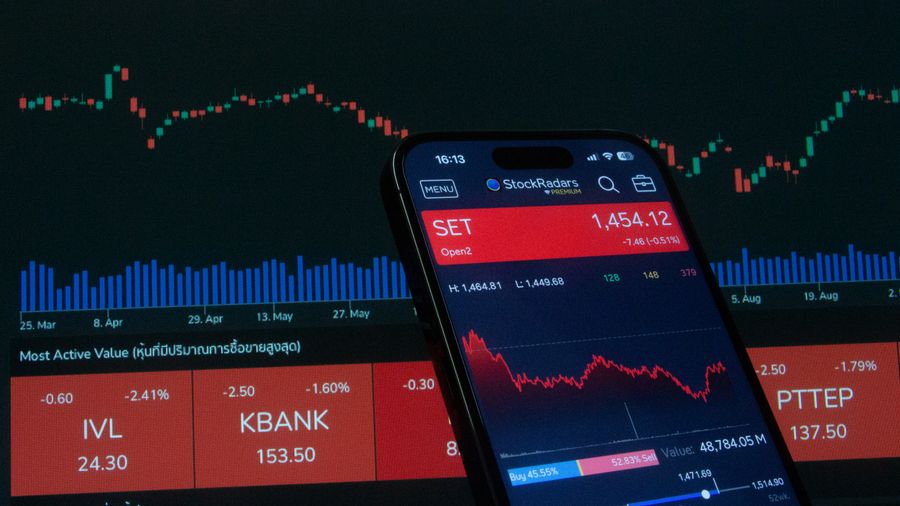
Automated trading is one of the most immediate wins for vibe coding. Traditional algorithmic trading systems require months of development: data pipeline setup, strategy backtesting, risk controls, and integration with broker APIs. An AI coding assistant can scaffold this entire architecture in days.
Consider the workflow:
- Strategy definition – You describe the trading logic in plain English: "Buy when RSI crosses below 30 and volume spikes. Exit after 5% gain or 2% loss."
- Code generation – The AI generates the strategy skeleton, data fetching logic, and backtest harness.
- Refinement – You test, adjust parameters, and the AI modifies the code iteratively. Real backtesting data feeds back into the loop.
- Risk layer – The AI adds position sizing, drawdown limits, and emergency kill switches.
- Broker integration – The AI connects to live APIs (Interactive Brokers, Alpaca, etc.) with error handling and logging.
The risk here is obvious: garbage in, garbage out. An AI-generated trading bot with a subtle bug can blow through your risk limit before anyone notices. This is why governance matters. Every generated strategy must pass:
- Backtesting across multiple market regimes (bull, bear, sideways)
- Paper trading validation before live capital
- Real-time monitoring dashboards with alert thresholds
- Kill switches that human traders can pull in milliseconds
What Role Does AI Play in Fraud Detection?

Fraud detection is where vibe coding delivers immediate, measurable value. Banks and payment processors face an avalanche of transactions, millions per second in some cases. Legacy rule-based systems catch obvious stuff (card used in two countries within an hour) but miss sophisticated fraud.
Vibe coding accelerates both model development and deployment:
Building the detection pipeline – Instead of hiring ML engineers to build a fraud model from scratch, you work with an AI assistant to:
- Structure training data from your transaction history
- Engineer features (transaction amount, merchant category, customer location, time of day)
- Scaffold a gradient boosting or neural network model
- Integrate with your real-time transaction processing pipeline
Real-world impact – Financial services companies deploying AI-driven fraud detection see 40-60% improvement in fraud catch rates while reducing false positives by 20-30%. False positives matter because they block legitimate transactions, frustrating customers.
The code also remains maintainable. Your data scientists can read the feature engineering logic, inspect the model's decision boundaries, and adjust thresholds on the fly. No black box.
One critical requirement: auditability. Regulators want to know why a transaction was flagged. Vibe coding means your AI assistant generates code that logs decision factors, which features triggered the flag, what confidence score was assigned, so you can justify every block to auditors and customers.
How Can AI Personalize Financial Services?
Personalization in finance means customizing recommendations, pricing, and products to individual client needs. A wealth manager handles 500 clients; personalized portfolio suggestions based on each client's risk profile, time horizon, and goals should be standard. But implementing this traditionally means hiring a team of analysts.
Vibe coding flips the script. An AI assistant can:
- Build customer segmentation logic that clusters clients by behavior, not just demographics
- Generate personalized product recommendations (bond ladders for retirees, growth ETFs for young investors)
- Create dynamic pricing models that account for customer lifetime value
- Automate the generation of personalized financial plans
Example: A credit union wants to offer personalized savings plans to members. Using vibe coding:
- You describe the use case: "Analyze member account activity and recommend a savings goal and monthly target."
- The AI generates code that pulls member data, calculates trends, and outputs a recommendation.
- You test it against a subset of members, refine the recommendation logic, and deploy it.
- Within weeks, the credit union is sending personalized savings suggestions to thousands of members.
What Challenges Do Finance Sectors Face with AI Integration?
The opportunities are real, but so are the barriers. Vibe coding in finance doesn't eliminate compliance; it demands it.
Regulatory compliance is the elephant. Financial services operate under heavy regulation: KYC/AML (know your customer / anti-money laundering), GDPR (data privacy), MiFID II (trading rules), SEC rules on algorithmic trading. Every system must be auditable and explainable. AI-generated code needs to be reviewed line-by-line to ensure it's not circumventing controls or creating compliance gaps.
This doesn't mean vibe coding is impossible in regulated environments. It means the code review process is more rigorous. Your compliance team needs to understand the generated code. This is why documentation and readability matter: if an AI generates a fraud detection rule in clean Python with comments, compliance can inspect it. If it's a black box, it won't pass audit.
"Benchmarks like FeatBench show leading AI agents still succeed on fewer than 30% of real-world feature requests.">, Vibe Coding in Banking: Rewriting the Rules of Innovation
Data security is non-negotiable. AI assistants need training data to generate code. But you can't send customer transaction data or account information to a third-party AI service. Solution: run the AI assistant locally or on your own secure infrastructure. Services like Cursor support self-hosted models; banking consortiums are building private AI coding assistants.
Auditability and explainability matter in ways they don't in other sectors. A trading algorithm needs to explain its decisions. A loan decisioning system must show why an applicant was approved or rejected. AI-generated code must log decision factors and be reviewable by humans.
What Are Some Successful Examples of Vibe Coding in Finance?
Real-world deployments show the potential:
Automated compliance reporting – A European bank used vibe coding to rebuild its MiFID II reporting pipeline. AI-generated code orchestrated data extraction from multiple systems, applied trading rules, and generated audit trails. The project took 8 weeks instead of 12 months. The code is maintainable by their operations team, and every decision is logged for regulators.
Personalized investment recommendations – A robo-advisor deployed AI-generated recommendation engines that analyze client portfolios in real time and suggest rebalancing. The system processes millions of portfolios daily. Clients receive personalized advice at scale; the company cut time-to-deployment by 60%.
Real-time settlement monitoring – A payment processor built a settlement reconciliation system using vibe coding. The AI generated code that ingests transaction feeds, detects discrepancies, flags exceptions, and routes alerts. Errors that used to take days to surface now surface in minutes.
Loan underwriting – A fintech lender used AI to generate the feature engineering and model serving code for loan decisioning. The system ingests applicant data, scores credit risk, and flags for human review. Deployment went from 6 months to 10 weeks. The code is auditable and decision logic is explainable.
These aren't theoretical wins. They're shipping in production, handling real money, and delivering measurable ROI. The common thread: vibe coding accelerates development without removing the human oversight that finance demands.
AI Impact on Finance Operations
The dashboard above shows how vibe coding transforms key financial operations. Development timelines shrink dramatically, a system that took six months now takes 10 weeks. Fraud detection accuracy jumps by 50% as AI handles feature engineering and model tuning at scale. Operational costs drop because less manual work is required for routine tasks like compliance reporting and transaction reconciliation. The trade-off is that code review overhead increases slightly, but this is a worthwhile investment given the speed and quality gains.
Integration Checklist: Deploying AI-Generated Code in Finance
Your progress is saved automatically in your browser.
FAQ
Frequently Asked Questions
The finance sector has resisted technology disruption longer than most industries, but the gap is closing. Vibe coding is not a replacement for financial expertise or engineering rigor. It's a multiplier on both. Teams that combine domain knowledge with AI-assisted development are shipping products and features that would have been impossible three years ago. The winners will be the institutions that learn to vibe code responsibly, fast development, rigorous review, and governance that turns speed into competitive advantage.
Additional Resources
- Vibe Coding in Banking: Rewriting the Rules of Innovation - Vibe coding in banking is reshaping how financial institutions innovate. Explore how culture, autonomy, and delivery models are changing ...
- Vibe Coding in Finance | Build Real Finance Tools with AI - Automate finance busywork to focus on more strategic work · Data Consolidation. Connect and transform source data using no-code tools · Spreadsheet Add-Ins.
- I Vibe Coded The Finance App I've Always Wanted - We have vibe coding tools for iOS development, Android development, ones that actually help manage and deploy backend infrastructure (https:// ...