

Photo by Ludovic Delot from Pexels
Your team is already using AI coding assistants. The question isn't whether to adopt vibe coding, it's how to scale it responsibly across your organization without sacrificing the engineering rigor that keeps production systems stable. Vibe coding done right delivers measurable speed gains while maintaining security, compliance, and code quality. This guide shows you the strategies that work at scale.
TL;DR
- Vibe coding (AI-assisted rapid development) can boost team throughput by 40-60% when integrated with existing engineering practices and review processes.
- Successful adoption requires clear guardrails: security standards, code review workflows, compliance gates, and team training on AI output evaluation.
- Common pitfalls include blind trust in generated code, inadequate testing, and inconsistent adoption across teams, all preventable with the right strategy.
- Case studies from enterprises show that teams combining AI speed with disciplined review outperform both traditional development and unmanaged vibe coding approaches.
What is vibe coding and why it matters
Vibe coding is rapid, iterative development powered by AI coding assistants like Cursor, GitHub Copilot, or Claude. Instead of writing every line by hand, you describe intent, often through comments, prompts, or test cases, and the AI generates working code. Then you review, refine, test, and ship. It's faster than traditional development but only when paired with the discipline that keeps large systems reliable.
For engineering leads, the real value isn't just speed. It's consistency across teams. When you standardize how AI code flows through review, testing, and deployment, junior developers write at senior-level velocity. New hires ramp faster. Legacy systems modernize without total rewrites. But this only works if you build the guardrails first.
How tech companies successfully integrate vibe coding

The most successful implementations follow a pattern: define the workflow first, then train the team to execute it consistently.
Blue Pearl, an enterprise modernization case, provides a concrete model. See how Blue Pearl transformed a legacy codebase, eliminated security risks and accelerated modernization with Bob, cutting delivery time by nearly 90%. They succeeded because they didn't just hand developers AI tools; they established gates. Code generated by AI went through the same security scanning, linting, and review as handwritten code. Compliance wasn't bypassed, it was embedded.
Other patterns that work:
- Team-level standards: Set a single review template for all AI-generated code. Make it visible. Reviewers know exactly what to check: security patterns, test coverage, performance assumptions.
- Gradual rollout: Start with one non-critical service or feature area. Use it to calibrate your review burden and feedback loops before rolling out enterprise-wide.
- Training feedback loops: When a reviewer finds a problem in AI output, log it. Share insights with the team weekly. Developers learn what the AI tends to miss (often: edge cases, error handling, async state). Adjust prompts accordingly.
Best practices for aligning AI-assisted coding with existing workflows
Seamless integration means AI fits into your current development cycle without creating parallel processes or review backlogs.
Make the prompt part of your spec. Instead of a vague ticket description, include the intent in a comment block. Example:
// Generate a function that validates email addresses using RFC 5322 rules.
// Return true for valid, false otherwise.
// Handle edge cases: leading/trailing spaces, special characters, internationalized domains.
// Do not use regex alone; validate against known patterns.
A clear prompt leads to code you can review faster. Vague prompts generate vague code that wastes reviewer time.
Integrate AI code into your existing CI/CD gates. Don't create a separate "AI code track." Route AI-generated code through your standard pipeline: linting, unit tests, integration tests, security scanning, performance benchmarks. If it fails, it fails the same way handwritten code does. This removes mystique and enforces accountability.
Use pair reviews for high-risk code. When an AI generates infrastructure changes, payment logic, or security-critical functions, use two reviewers instead of one. One checks correctness; the other checks for subtle assumptions or patterns the AI might have copied blindly from training data.
Establish a rollback protocol. AI code sometimes works great for six months, then catastrophically fails on an edge case nobody anticipated. Make rollback fast and non-humiliating. Log the failure. Update the prompt. Ship a corrected version. Treat it as learning, not as evidence that AI coding doesn't work.
Comparing vibe coding to traditional development
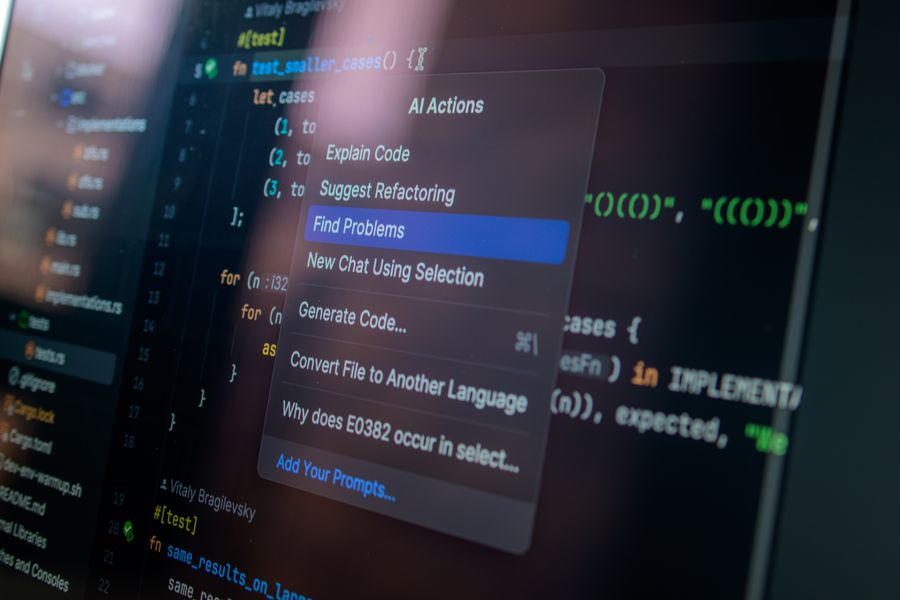
The speed advantage is real but often misunderstood. Vibe coding doesn't eliminate work; it redistributes it. Here's what actually changes:
| Aspect | Traditional Development | Vibe Coding |
|---|---|---|
| Coding time | 60% of sprint | 20% of sprint |
| Code review time | 15% of sprint | 35% of sprint |
| Testing effort | Manual + automated | Heavier automated testing required |
| Debugging time | Often high (detective work) | Lower (clearer intent in prompts) |
| Onboarding new patterns | 2-3 weeks | 3-5 days (prompt-driven learning) |
Real productivity gain is typically 40-60% when the workflow is tuned and the team is trained. Not 10x. Not "write requirements and get a product." It's meaningful but earned.
Addressing security and compliance challenges
This is where vibe coding strategy separates from vibe coding fantasy. Your security team isn't going away.
Common concerns:
- Generated code embeds vulnerabilities: Possible. AI trains on internet code, including insecure patterns. Mitigation: scan all generated code for known CVEs, dependency vulnerabilities, and OWASP top-10 patterns. Make this non-negotiable.
- IP liability: If the AI was trained on proprietary code, could your generated code contain hidden copyright material? Unlikely for modern systems, but real for paranoid legal teams. Use AI services with contractual IP indemnification. If you can't, treat vibe coding as internal acceleration only.
- Compliance audit trails: Regulators may ask: "Who wrote this code?" Answer: "An AI assisted a human who reviewed and approved it." Document the human decision, not the AI generation. Most compliance frameworks accept this if your review process is documented and rigorous.
- Data leakage via prompts: Never send sensitive data, customer PII, or secret keys to a public AI service. Vet your AI tooling for data handling policies. For regulated environments, use on-premises or private-cloud AI solutions.
- Set a baseline security standard (e.g., OWASP top 10, CWE-25).
- Scan all generated code automatically before human review.
- Train reviewers to spot common AI mistakes (usually: missing error handling, assumption about happy path).
- Log all AI-generated code in version control with a marker (e.g., commit message:
vibe-generated: true). - Audit quarterly: run a report of all generated code, spot-check it, measure defect rates.
How teams overcome implementation obstacles

Rolling out vibe coding across a team hits predictable friction points. Here's how successful teams navigate them.
Resistance from senior developers: They worry about skill erosion and relevance. Address this head-on: frame vibe coding as a multiplier, not a replacement. Senior developers write the prompts, set the standards, and review the output. They become architects and quality gatekeepers. Career growth isn't sideways, it's upward. Create a "vibe coding mentor" role. Senior devs who excel at writing clear prompts and evaluating AI output get recognized and promoted.
Inconsistent adoption: One team uses AI aggressively; another barely touches it. Quality and velocity diverge. Create a lightweight adoption standard: minimal set of tools, shared review checklist, unified logging. Don't over-prescribe, let teams choose their AI tools, but do enforce consistency in how code flows through review.
Burnout from review overload: If AI code creation outpaces review capacity, reviews pile up and morale tanks. Solution: tier your reviews. Low-risk code (simple utilities, tests, documentation) gets a single quick review. High-risk code (auth, data handling, infrastructure) gets deeper scrutiny and possibly a pair review. Automate away low-value review work (style, formatting) with linters.
Prompt quality bottleneck: Developers write vague prompts, AI generates mediocre code, reviews take forever. Invest in a prompt engineering workshop. Show examples of good prompts vs. bad ones. Document patterns. Make prompt-writing a team discipline, not a free-for-all. Teams that master this see review friction cut in half.
Integration Workflow at a Glance
The diagram above shows how structured vibe coding flows through your existing organization. It's not a bypass, it's an acceleration of your current process.
The process at a glance
Vibe Coding Integration Checklist for Tech Teams
Your progress is saved automatically in your browser.
FAQ
Frequently Asked Questions
Additional Resources
- What is Vibe Coding? - Vibe Coding is a fresh take in coding where users express their intention using plain speech, and the AI transforms that thinking into ...
- Taming Vibe Coding: The Engineer's Guide - Motivation: Why vibe code? · Develop your prompting skills · A good approach: the prompt template · A better approach: context engineering · An ...
- Vibe Coding: A Guide for Startups and Founders - Vibe coding is the practice of writing computer code through natural language instructions or prompts, rather than traditional programming.