
Innovation doesn't happen because you mandate it. It happens when teams feel safe to experiment, when failure is a learning opportunity rather than a career liability, and when the tools make exploring new ideas faster than defending old ones. AI changes the equation for engineering leads: you now have the chance to build teams that ship faster while staying grounded in engineering discipline. The question is how to orchestrate that balance without letting the pace override judgment or turning your team into a collection of individual contributors churning out code.
Photo by Vitaly Gariev from Pexels
TL;DR:- Foster innovation by removing friction from experimentation, establishing psychological safety, and rewarding both wins and instructive failures.
- Use AI to amplify collaboration: pair engineers with models for real-time feedback, run parallel explorations, and share learnings across the team.
- Build continuous learning into your sprint cadence, not as an afterthought, code reviews with AI insights, lunch-and-learns on new patterns, and time to refactor using fresh discoveries.
- Balance innovation with strategic alignment: set clear constraints, measure what matters (velocity, quality, developer satisfaction), and kill projects that don't advance the business.
Why Innovation Matters in Development Teams
Innovation isn't about having the latest tools. It's about shipping value faster while reducing the probability that your ship sinks. Teams that innovate consistently outship teams that follow playbooks. They adapt to market signals quicker, attract better engineers (who want to work on interesting problems), and build institutional knowledge that compounds over time.
Here's the tension: velocity and innovation pull in opposite directions when poorly managed. A team cranking out features on a predictable schedule doesn't have time to experiment. A team obsessed with experimentation ships nothing. The engineering lead's job is to create conditions where the two coexist.
AI makes this harder and easier at once. Harder because AI-generated code tempts your team toward shortcuts that mask gaps in understanding. Easier because AI collapses the time between idea and prototype, making safe experimentation actually viable.
How AI Encourages Experimentation and Collaboration
AI thrives in an exploratory context. A developer can ask an AI model to generate three different architectural approaches, run them in parallel, and learn from contrasting implementations in hours instead of weeks. That velocity transforms experimentation from a luxury into a standard motion.
Remove friction from trying ideas. When your team feels confident that spinning up a side approach is cheap (in time and resources), they try more approaches. Establish a pattern: a branch, a spike, a prototype. The prototype doesn't need to be perfect or ship. It needs to teach. Pair each spike with a code review that focuses not on whether it ships, but on what the team learned. Did we discover a pattern worth standardizing? Did we rule out an approach that looked promising? Both are wins.
Create collaborative debugging loops. AI works best when it's treating real problems. A developer stuck on a subtle race condition can use an AI pair to rubber-duck the problem, generate test cases that expose the issue, and explore fixes without waiting for async feedback from teammates. The key is post-hoc review: someone senior looks at the AI-generated insight and validates it against your codebase's constraints. This turns AI from an autopilot into a thought partner.

Share discoveries across the team. The moment one developer finds a useful AI-assisted pattern, make it visible. Not as a mandate ("now everyone write tests this way"), but as a playbook: "Sarah found that prompting the model with constraint-driven examples halves the number of test rewrites. Here's what she did." Over time, these playbooks compound into a team culture where learning is explicit, visible, and remixable.
"The most successful organizations use different ways to get leaders in, move forward with artificial intelligence, and build support in the business.">, AI
Collaboration with AI is different from collaboration with humans. With humans, meetings are synchronous and emotional. With AI, the loop is fast and low-pressure. Pair this strength with human code review (which is slow but catches context and intent that AI misses) and you get a rhythm where developers move faster but the team's standards stay intact.
The Role of Continuous Learning in AI-Driven Teams
Innovation without learning is just luck that gets worse over time. Your team needs dedicated space to internalize what AI teaches them, to calibrate their understanding of when AI advice is sound versus when it's plausible-sounding nonsense, and to build confidence that they can navigate the uncertainty AI introduces.
Embed learning into the sprint. Don't treat learning as something that happens in your spare time. Allocate 10-15% of your sprint capacity to training, refactoring with new patterns, and experiment spikes. This is not wasted time. It's inoculation against technical debt and the foundation of the team's next generation of velocity. A team that never improves its tools, patterns, and understanding becomes steadily slower, not faster.
Run structured code reviews focused on learning. In a traditional code review, you're checking correctness and style. In an AI-augmented review, add a layer: What did the AI generate that surprised you? What would you have written differently? Why? These questions force developers to articulate intent instead of just accepting plausible code. Over a few sprints, this discipline raises the bar on what your team accepts from themselves and from models.
Rotate who leads explorations. When a discovery is made (a new testing approach, a refactoring pattern, a way to structure a complex system), rotate the responsibility for documenting it and teaching it. Junior developers lead lunch-and-learns on patterns they just learned from an AI pair. Senior developers articulate why they rejected an AI suggestion and what they chose instead. This distributes knowledge and builds confidence in the team that they own their tools, not vice versa.
Create a shared vocabulary for AI-assisted work. Develop terms your team uses: a "spike" is a throwaway prototype to learn; a "seed" is an AI suggestion that's promising but needs human oversight; a "pattern" is validated across multiple implementations. When everyone uses the same language, knowledge transfer moves from heroic (one person knows, everyone else guesses) to normal (we all speak the same language).
Real Examples: How Teams Foster Innovation with AI
Teams that win at this balance tend to follow a few patterns.
GitHub's internal adoption. GitHub uses AI (including their own Copilot) across product teams with explicit guardrails. The culture is: experiment in parallel branches, learn from AI suggestions through structured code review, and scale patterns that work. They measure success not on lines of code, but on deployment frequency and rollback rate. That metric choice enforces discipline: if you're shipping faster but rolling back more, the velocity gain is an illusion.
Stripe's innovation sprints. Stripe runs quarterly sprints where teams use AI to explore non-core ideas: new integration patterns, infrastructure simplifications, process improvements. The constraint is clear: if it's not ready to deploy (or inform future work) by sprint end, it doesn't count. This prevents open-ended experimentation from consuming resources. The winners get showcased internally and often become next quarter's priorities.
Anthropic's model-guided development. Because Anthropic builds LLM models, they use AI deeply in their own infrastructure work. The practice that matters: every architectural decision is challenged by asking an AI model to argue for alternatives. The human team then decides. This forces clarity (you have to articulate why your choice is right) and prevents groupthink (an outside perspective, even artificial, surfaces blind spots). They treat AI as a thinking tool, not an autopilot.
OpenAI's rapid iteration culture. OpenAI ships products in weeks that would take traditional software teams months. The secret isn't less discipline, it's different discipline. They use AI to collapse the time between hypothesis and data. Developers build, deploy, and observe within days. The learning loop is tight. Failures teach faster. Successes scale faster. The downside: if you slip on quality gates, velocity becomes a liability. So the guardrails are strict and enforced.
The common thread: innovation happens when you have clear constraints, fast feedback loops, and a culture that values learning over output.
Roadmap for Integrating AI into Team Processes
Here's how to structure the adoption so it compounds instead of devolving into chaos.
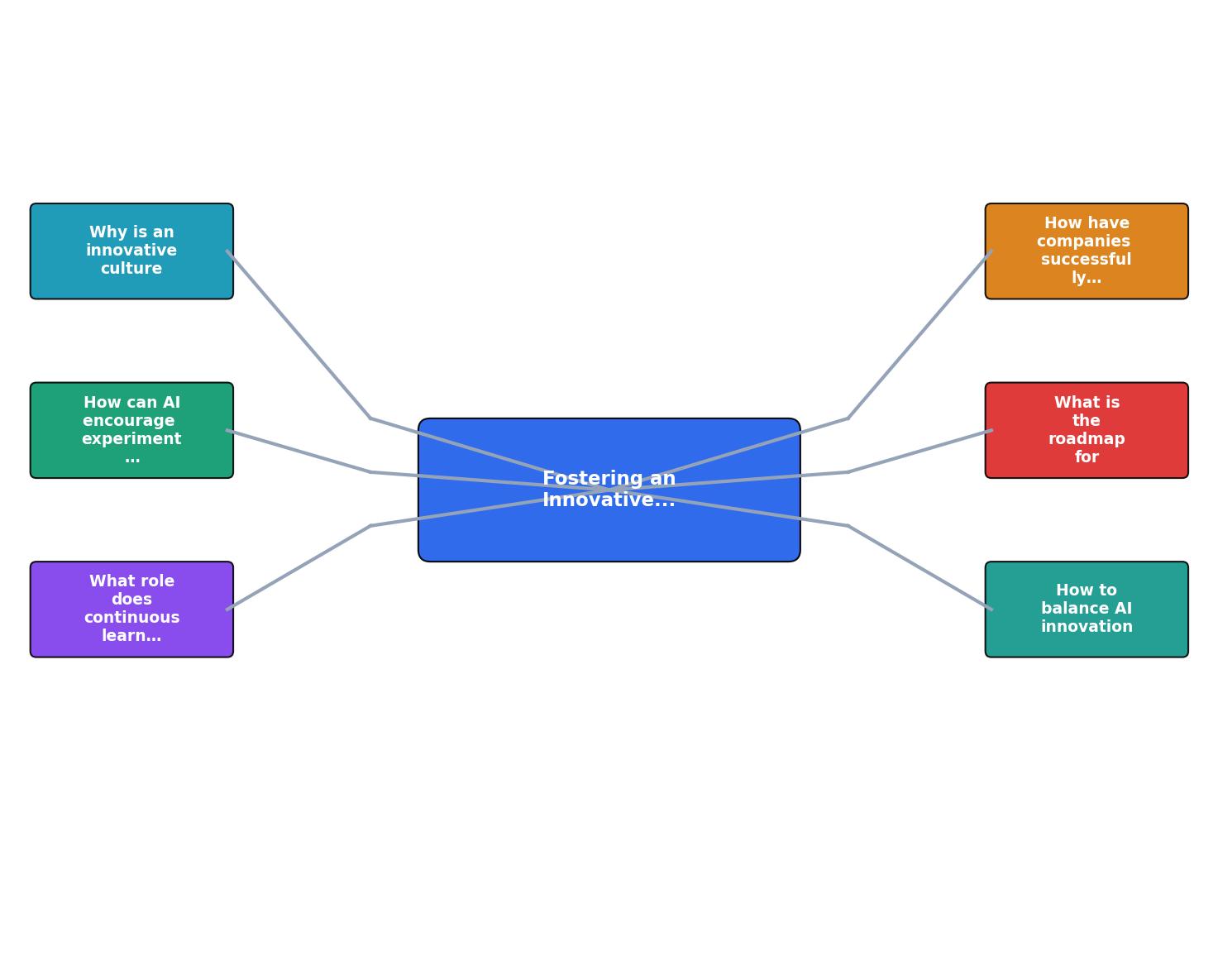
Phase 1: Foundation (weeks 1-4). Establish clear policies on what AI tools your team is allowed to use, what code requires human review, and what outputs are off-limits (e.g., "AI-generated security code requires a security engineer's sign-off"). Run a workshop where developers practice using AI on real codebase problems, then code review the output together. The goal: everyone has hands-on experience before decisions are made.
Phase 2: Distributed Exploration (weeks 5-12). Let teams run parallel experiments with AI on different problem spaces. One team optimizes build times using AI-generated infrastructure patterns. Another uses AI to refactor legacy code. A third uses AI as a test-generation partner. Each documents what works, what failed, and why. These become your playbooks. Run a mid-sprint sync where teams share discoveries and blockers.
Phase 3: Pattern Synthesis (weeks 13-20). Pool the learnings from Phase 2 and codify the ones that work. Create templates, checklist guides, and documented code patterns that the team now knows are safe and effective. Update your code review guidance to reflect these patterns. New developers now onboard faster because the team's knowledge is explicit.
Phase 4: Measurement and Tuning (ongoing). Track metrics that matter: deployment frequency, mean time to recovery, developer satisfaction, and time spent on refactoring versus feature work. Use these signals to decide whether to expand, constrain, or pivot your AI adoption strategy. If deployment frequency goes up but rollback rate spikes, tighten code review. If developer satisfaction drops, the process is too rigid. Adjust.
Balancing Innovation with Strategy and Risk
The seductive trap of AI is that it makes fast feel like progress. You can ship a lot of code that doesn't move the business needle. The lead's job is to ensure innovation serves strategy, not replaces it.
Set constraint-driven goals. Instead of "innovate more," say "reduce deployment time by 20% while keeping rollback rate under 2%." Constraints focus exploration. They make it clear which innovations matter and which are distractions.
Define what failure teaches. Some failures are expensive lessons. Others are cheap. Before a spike, agree on what makes the experiment worth running. If you learn that approach X doesn't work, that's a win if it saves you from shipping broken code. If you spend weeks on an idea that's off-strategy, that's a loss even if it "worked."
Review for alignment quarterly. Set aside time each quarter to ask: Are our innovations aligned with where the business is going? Are we building the right competitive advantages? If half your team is exploring ML ops but your product doesn't need it, that's exploration debt. Redirect it.
Protect quality gates ruthlessly. The moment you let AI-generated code bypass your standards because it's fast, you've lost the game. Velocity is worthless if the ship sinks. Standards exist. Hold them. Use AI to move faster within those constraints, not to remove the constraints.
AI Innovation Framework for Engineering Teams
Psychological safety to experiment; failure is data, not shame.
AI pair programmers with clear boundaries and human oversight.
Spikes → prototypes → code review → playbooks → standards.
Track velocity, quality, and alignment. Adjust quarterly.
This framework shows how the four dimensions of AI-driven innovation fit together. Culture sets the permission. Tools provide the capability. Process ensures learnings scale. Measurement keeps strategy aligned with execution.
Practical Roadmap: Steps to Implement
AI Innovation Integration Roadmap
Your progress is saved automatically in your browser.
FAQ
Frequently Asked Questions
Key Takeaway
Innovation in AI-driven teams isn't about moving fast; it's about learning fast. Set clear constraints, measure what matters, and create a culture where failure teaches instead of penalizes. Use AI to amplify your team's capability, not replace their judgment. The teams that win are those that balance velocity with discipline, exploration with strategy, and technology with people.
Building an innovative culture with AI doesn't require hiring different people or replacing your engineering rigor. It requires removing friction from exploration, making learning visible and shared, and treating innovation as a controlled system rather than chaos. Your role as a lead is to set the constraints, measure the outcomes, and create conditions where developers want to do this work because it makes them better at their craft, not because they're afraid not to. The teams that get this right, GitHub, Stripe, Anthropic, aren't just shipping code faster. They're shipping smarter, with higher confidence, and with engineers who feel in control of their tools instead of controlled by them.
Additional Resources
- How to Foster a Culture of AI Adoption in Your Organization - Building a sustainable, AI-driven culture requires a unified approach to leadership, training, and transparent communication.
- Ways to Foster a Culture of AI Innovation - - Foster a culture of innovation and experimentation within your team. - Work on your collaborators' mindset and skills to maximize the opportunities AI offers.
- How AI & Culture Intersect: 5 Principles for Senior Leaders - Culture is key to AI integration. Senior leaders must model behaviors, foster collaboration, and align AI efforts with organizational goals.
Ready to Master Vibe Coding?
Learn to build software faster with AI assistance using the Vibe Coding Bible.
Get Started