Risk Management Frameworks for AI Coding
AI-generated code ships faster than any team can manually review it, and that speed creates a specific category of risk that traditional software governance was never designed to handle. When a language model writes 40% of your codebase in a quarter, your attack surface grows at the same rate, but your compliance posture and threat modeling probably did not keep up. This guide breaks down the frameworks that actually work for AI coding environments and gives you a concrete implementation path you can start this week.

AI-generated code ships faster than any team can manually review it, and that speed creates a specific category of risk that traditional software governance was never designed to handle. When a language model writes 40% of your codebase in a quarter, your attack surface grows at the same rate, but your compliance posture and threat modeling probably did not keep up. This guide breaks down the frameworks that actually work for AI coding environments and gives you a concrete implementation path you can start this week.
TL;DR:- AI-generated code introduces unique risks around IP ownership, hallucinated dependencies, and unvetted security patterns that generic risk frameworks miss.
- ISO/IEC 27001, NIST AI RMF, NIST CSF, and the OWASP AI Security guidelines each cover different slices of the problem. No single framework does everything.
- Combining NIST AI RMF for AI-specific governance with ISO 27001 for broader information security gives most engineering teams the best coverage-to-effort ratio.
Why Risk Management Matters for AI Code
Every line of AI-generated code carries implicit assumptions the model learned from training data. Those assumptions include deprecated API patterns, insecure defaults, and license-contaminated snippets. Without a structured risk management approach, you are trusting a probabilistic system to make deterministic security decisions.
Three categories of risk stand out in AI coding environments:
- Security risk - AI models frequently suggest code with known vulnerability patterns: SQL injection via string concatenation, hardcoded secrets, missing input validation. Automated scanners catch some of this, but not the subtle architectural flaws.
- Compliance risk - Generated code may include fragments that match copyrighted or copyleft-licensed source material. If your product ships GPL-licensed code without disclosure, you have a legal problem.
- Operational risk - AI can hallucinate package names that do not exist (or worse, that an attacker has registered). Dependency confusion attacks targeting AI-suggested packages are already documented.
Popular Risk Management Frameworks

Here are the four frameworks most relevant to teams shipping AI-assisted software:
ISO/IEC 27001
The international standard for information security management systems (ISMS). It requires you to define an asset inventory, perform risk assessments, implement controls, and audit continuously. ISO 27001 does not specifically address AI, but its control set (Annex A) covers access management, cryptography, supplier relationships, and incident response that apply directly to AI coding pipelines.
NIST AI Risk Management Framework (AI RMF)
Published by the National Institute of Standards and Technology, the NIST AI RMF is purpose-built for AI systems. It organizes governance into four functions: Govern, Map, Measure, and Manage. Each function includes specific actions for identifying AI-specific risks like bias, hallucination, and opacity. For engineering leads, the Map function is where you document how AI-generated code enters your codebase and what controls gate it.
"The most recent version, published in February 2024, has the same basic structure as the AI framework.">, [How to Choose an AI Risk Management Framework [Guide]](https://hyperproof.io/guide-to-ai-risk-management-frameworks/)
NIST Cybersecurity Framework (CSF)
The NIST CSF focuses on cybersecurity outcomes across five core functions: Identify, Protect, Detect, Respond, and Recover. It is less AI-specific than the AI RMF but provides a mature, widely adopted structure for securing the infrastructure that AI coding tools run on. Think of it as the foundation layer.
OWASP AI Security and Privacy Guide
The OWASP project maintains a growing set of guidelines specifically for AI application security. It covers prompt injection, training data poisoning, model theft, and output manipulation. For teams using AI coding assistants, the sections on output integrity and supply chain security are directly applicable.
Comparing the Frameworks
Not every framework fits every team. Here is how they stack up across the dimensions that matter most for AI coding governance:
| Dimension | ISO/IEC 27001 | NIST AI RMF | NIST CSF | OWASP AI Guide |
|---|---|---|---|---|
| AI-specific controls | Limited | Comprehensive | None | Comprehensive |
| Certification available | Yes | No (voluntary) | No (voluntary) | No |
| Implementation cost | High | Medium | Medium | Low |
| Regulatory recognition | Global | US federal + growing | US federal | Industry standard |
| Best for | Enterprise compliance | AI governance policy | Infra security | AppSec teams |
| Maturity | 20+ years | 2 years | 10+ years | Evolving |
The practical takeaway: NIST AI RMF + ISO 27001 covers the widest ground if you need both AI-specific governance and certifiable information security. Smaller teams or startups can start with OWASP AI guidelines and NIST CSF, then layer on formal frameworks as the product and team grow.
Implementing a Risk Framework

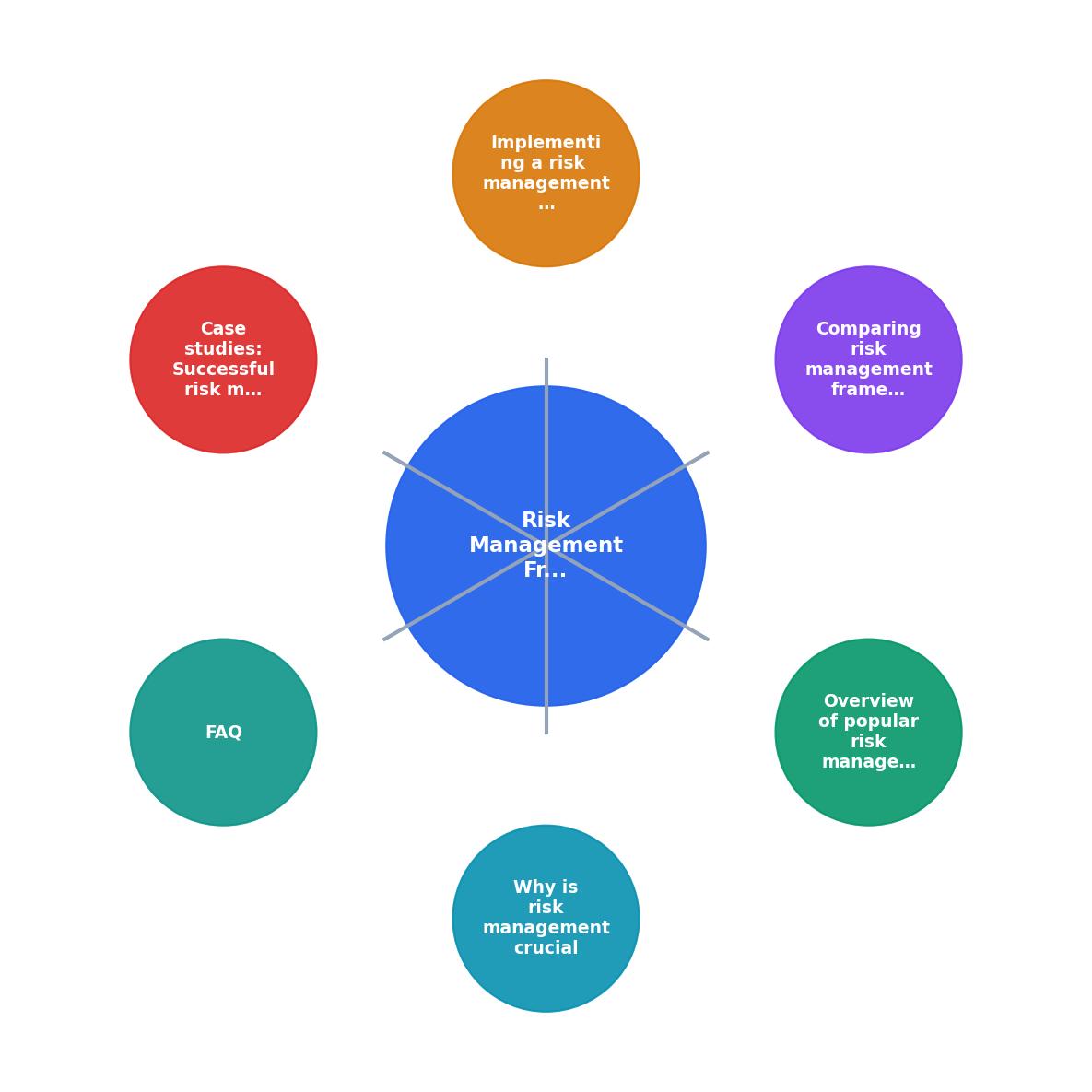
Implementation is where most teams stall. The framework documents are long, abstract, and written for auditors. Here is a concrete five-step process that translates framework requirements into engineering actions.
Step 1: Inventory AI touchpoints
Map every place AI-generated code enters your system. This includes IDE assistants (Cursor, Copilot, Cody), chat-based generation (Claude, ChatGPT), automated PR bots, and any internal fine-tuned models. Document the model, the access scope, and the data it can see.
Step 2: Classify risks by severity
For each touchpoint, list the risks using a simple likelihood-times-impact matrix. A Copilot suggestion that introduces a vulnerable dependency in a payment service is high-likelihood, high-impact. A formatting suggestion in a README is low on both axes. Focus your controls on the top-right quadrant.
Step 3: Define controls
Controls are the specific actions that reduce risk. Examples:- Pre-commit SAST scans that block known vulnerability patterns in AI-generated code
- License scanning on every new dependency, especially ones you did not explicitly choose
- Mandatory human review for any AI-generated code touching authentication, authorization, or data storage
- Dependency lockfiles with hash verification to prevent hallucinated package attacks
Step 4: Assign ownership
Every control needs an owner. Not a team, a person. The security lead owns SAST configuration. The tech lead owns the review policy. The DevOps engineer owns dependency scanning in CI. Without named owners, controls decay within weeks.
Step 5: Audit and iterate
Run a quarterly review of your risk register. Check which controls fired, which risks materialized, and what new AI tools the team adopted since the last review. Update the inventory and controls accordingly.
Real-World Risk Management in Practice

Scenario: E-commerce platform with AI-assisted development
A 30-person engineering team at a mid-size e-commerce company adopted Cursor and Claude for daily development. Within two months, their dependency count grew by 23%. A routine audit found three npm packages that did not exist in the public registry six months earlier, all suggested by AI and blindly installed by developers.
Their response:- Adopted NIST AI RMF's Map function to catalog every AI tool and its access level.
- Added
npm auditand Snyk scans to CI, configured to fail builds on high-severity findings. - Created an internal allowlist of approved packages. Any AI-suggested dependency not on the list triggers a manual review.
- Scheduled monthly risk register reviews with the security champion from each squad.
Scenario: Fintech startup preparing for SOC 2
A fintech startup using AI coding tools needed SOC 2 Type II certification. Their auditor flagged the lack of controls around AI-generated code as a gap. The team mapped ISO 27001 Annex A controls to their AI workflow:
- A.8.9 (Configuration management) applied to AI tool settings and model versions
- A.8.25 (Secure development lifecycle) extended to include AI code review gates
- A.5.19 (Supplier relationships) documented for each AI provider's data handling policies
The following dashboard illustrates how a typical risk assessment might look after implementing framework controls across an AI coding pipeline:
AI Code Risk Assessment Dashboard
AI Coding Risk Management Implementation Checklist
Your progress is saved automatically in your browser.
FAQ
Frequently Asked Questions
Additional Resources
- AI Risk Management Framework - NIST has developed a framework to better manage risks to individuals, organizations, and society associated with artificial intelligence (AI).
- A Guide to AI Risk Management Frameworks - Explore leading AI risk management frameworks and learn how to choose the right one for your business and risk profile.
- MIT AI Risk Initiative - The MIT AI Risk Initiative produces authoritative data and frameworks to help you identify, prioritize, and manage the risks from AI.
Ready to Master Vibe Coding?
Learn to build software faster with AI assistance using the Vibe Coding Bible.
Get Started